
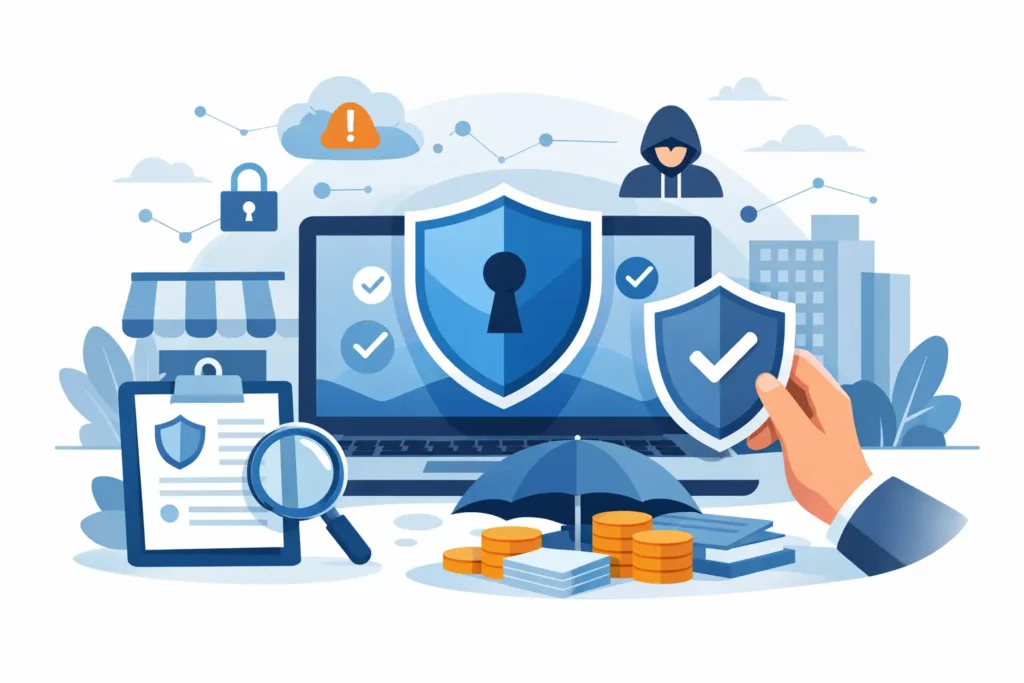
A stolen laptop. A fake invoice that looks real. A ransomware message that locks up your scheduling, billing, or customer records on a Monday morning. For many owners, cyber insurance for small business starts to make sense the moment they realize a cyber event does not only hit big corporations. It can shut down a local office, delay payroll, damage client trust, and create expenses that arrive all at once.
Small businesses are often more exposed than they think. You may store customer contact information, payment details, employee records, contracts, or medical and financial data. Even if your company is not especially tech-focused, your operations likely depend on email, cloud software, online payments, and connected devices. That creates risk, and it is exactly why cyber coverage has become a practical conversation for companies across New Jersey, New York, Florida, and beyond.
What cyber insurance for small business actually covers
Cyber policies are designed to help a business respond financially and operationally after a digital incident. The exact coverage depends on the carrier and policy form, but most plans are built around two broad categories: your direct losses and your liability to others.
Direct losses can include the cost to investigate a breach, hire forensic specialists, restore data, recover systems, and manage business interruption if your operations are down. In many cases, coverage may also help with ransomware response, including expert negotiation support and certain extortion-related costs, if permitted by law and policy terms.
Liability coverage is about claims made against your business. If customer information is exposed, or a third party alleges your security failure caused them financial harm, the policy may help with legal defense, settlements, or regulatory response. Some policies also include notification expenses, credit monitoring, public relations support, and crisis management services.
That said, not every cyber policy includes the same protections. One policy may offer strong business interruption coverage but limited social engineering protection. Another may respond well to a data breach but exclude losses tied to outdated systems or unencrypted devices. The details matter.
Why small businesses are frequent targets
There is a common assumption that hackers only chase large companies because that is where the money is. In practice, smaller businesses are often appealing because they tend to have fewer internal controls, less formal training, and less dedicated IT support.
A small law office, retailer, accounting firm, contractor, medical practice, or professional services company may process valuable information without having enterprise-level security. Criminals know that one convincing phishing email can be enough. They also know that smaller businesses may feel pressure to pay quickly if systems go down and revenue stops.
This is where cyber insurance for small business becomes more than a checkbox. It can provide access to response resources that many owners do not have lined up on their own. Instead of trying to figure out legal obligations, breach vendors, and recovery steps during a crisis, you have a process to follow and support to call.
The incidents business owners should think about most
Most cyber claims do not begin with a dramatic Hollywood-style hack. They often start with ordinary business activity.
Email fraud is a major example. An employee receives a message that appears to come from a vendor, client, or executive and sends funds or sensitive information to the wrong place. Ransomware is another major concern, especially for businesses that rely on scheduling software, billing platforms, or shared files. A data breach can happen through a stolen device, weak password practices, vendor compromise, or accidental exposure of records.
There are also quieter losses that still create serious disruption. A website outage during a busy period can cut off sales. A cloud service interruption can freeze work. An employee who clicks the wrong link can trigger days of cleanup, even if no large-scale breach makes the news.
The practical point is this: cyber losses are not only about stolen data. They are also about lost time, interrupted income, professional fees, and the cost of restoring trust.
What a policy may not cover
This is the part many owners do not hear until after a claim. Cyber insurance is valuable, but it is not unlimited, and it is not a substitute for basic security practices.
Some policies exclude incidents tied to prior known issues, intentional acts, or failure to maintain minimum security standards. If the application says you use multifactor authentication and regular backups, but that is not actually true, you could have a coverage problem later. Certain policies may limit coverage for funds transfer fraud, dependent business interruption, or losses involving vendors unless those items are specifically included.
It also depends on how the policy defines a covered event. A voluntary transfer of funds caused by deception may be treated differently from a network breach. That is why plain-English review matters. Owners should understand where the policy is broad, where it is narrow, and where an endorsement may help close a gap.
How to choose cyber insurance for small business
Start with the way your business really operates, not with a generic checklist. Think about what information you collect, which systems keep revenue moving, who has access, and what would happen if those systems went offline for three days.
A company that stores customer payment information has a different exposure than a consultant who mainly relies on email and shared documents. A medical office, law firm, property manager, retailer, or cannabis-related business may face more complex privacy, contractual, or regulatory obligations. Industry matters, but workflow matters just as much.
From there, look closely at a few key areas: breach response costs, business interruption, cyber extortion, social engineering, regulatory defense, and third-party liability. If you rely heavily on outside vendors or cloud platforms, ask how the policy handles incidents that start with them. If your staff handles wire transfers or payment instructions, ask specifically about fraudulent instruction and funds transfer loss.
Deductibles and limits deserve the same attention as the headline premium. A lower-cost policy can look attractive until you realize the sublimits are too small for the type of loss you are most likely to face. On the other hand, not every business needs the largest limit available. The right fit depends on your revenue, data volume, contractual requirements, and operational dependence on technology.
Cyber coverage works best with prevention
Insurance helps you recover, but prevention lowers the odds and often improves your options in the market. Carriers increasingly want to see practical controls in place before they offer favorable terms.
That usually includes multifactor authentication, strong password management, employee training, regular software updates, endpoint protection, and dependable backups. It does not mean your business needs a huge IT department. It means you need a reasonable, documented effort to reduce avoidable risk.
This is also one of the best ways to keep the insurance conversation productive instead of stressful. When your systems and procedures are clearer, the application process tends to go more smoothly, and the coverage recommendations can be more precise.
Why guidance matters more than ever
Cyber policies can be difficult to compare because the wording is not always consistent from one carrier to another. Two quotes may look similar on price while offering very different treatment of ransomware, payment fraud, business interruption, or vendor-related losses.
That is where a hands-on agency relationship can make a real difference. Business owners do not need more jargon. They need someone to explain what is covered, what is limited, and what questions to ask before a claim happens. For companies that want practical support and clear answers, NewEdge Insurance Agency takes that advisory approach seriously.
The goal is not to sell fear. It is to help you make a measured decision based on your actual exposure. Some businesses need broader cyber protection because they handle sensitive records or cannot afford downtime. Others may need a more focused policy built around email fraud, response costs, and basic liability. It depends, and that is normal.
A smart purchase, not a panic purchase
The best time to think about cyber insurance is before a bad email, frozen system, or customer notification issue forces the conversation. When coverage is chosen calmly, with a clear view of operations and risk tolerance, it becomes part of a larger protection strategy rather than a rushed fix.
For a small business, that can mean steadier recovery after a cyber event, fewer out-of-pocket surprises, and a better chance of keeping clients informed and operations moving. Good coverage will not prevent every problem, but it can give you a path forward when the unexpected happens. And for most owners, that kind of clarity is worth having before you need it.