
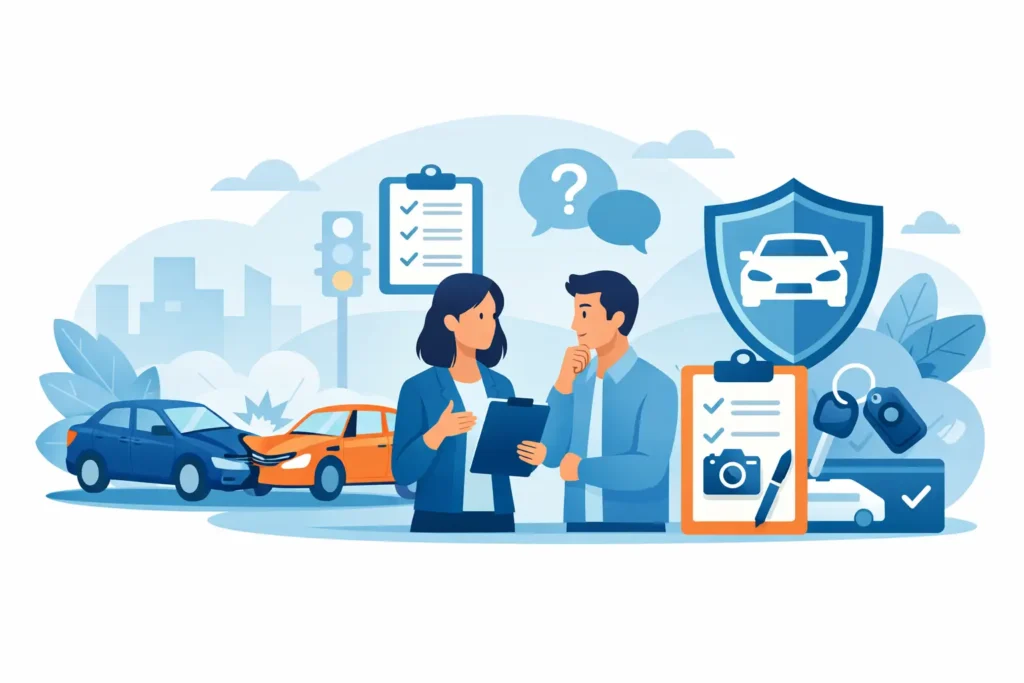
The moments after a crash are rarely clear-headed. Your adrenaline is up, your car may be damaged, and you may already be worrying about repairs, medical bills, and whether your insurance rates will go up. If you are searching for what to do after a car accident insurance questions included, the best approach is to slow the situation down and handle it step by step.
A good claims outcome often starts at the scene. What you do in the first hour can affect how quickly your claim moves, how accurately fault is assessed, and whether your insurer has the information needed to protect you.
What to Do After a Car Accident for Insurance Purposes
First, check for injuries and move to safety if you can do so without creating more risk. If anyone is hurt, call 911 right away. Even in a minor accident, a police report can be helpful for the insurance process because it creates an independent record of what happened.
Once everyone is safe, exchange information with the other driver. You will want their full name, contact details, insurance company, policy number if available, driver’s license number, and vehicle information. Keep the conversation calm and factual. This is not the time to debate fault or apologize in a way that could be misunderstood later.
Take photos before the vehicles are moved, if it is safe to do that. Get wide shots of the full scene and closer shots of damage, license plates, skid marks, traffic signs, weather conditions, and anything else that helps show what happened. If there are witnesses, ask for their names and phone numbers. Those details may matter more than people realize, especially when drivers remember the accident differently later.
Just as important, make notes while the event is still fresh. Write down the time, location, direction each car was traveling, and anything the other driver said. Small facts can become very useful when an adjuster reviews the claim days later.
Report the Accident Promptly
One of the most common mistakes after a crash is waiting too long to notify the insurance company. Even if the damage seems minor, report the accident as soon as possible. Many policies require prompt notice, and delay can create avoidable complications.
When you call, stick to the facts. Share where and when the accident happened, who was involved, whether police responded, and what damage or injuries you know about so far. It is fine to say you are still gathering information. It is better to be accurate than overly certain.
If you work with an independent agency, this is a good time to reach out for guidance. A hands-on agency can help you understand whether the claim is likely to go through your policy, the other driver’s policy, or both, and what to expect next.
What information your insurer will usually ask for
Most carriers will ask for the basic accident details, photos, contact information for everyone involved, the police report number if one exists, and a description of vehicle damage. If there are injuries, they may also ask where treatment was received and whether follow-up care is expected.
If your car is not drivable, ask about towing, storage, and where the vehicle should be taken. Those choices can affect cost and timing. It is better to ask early than assume reimbursement later.
Understand Which Coverages May Apply
Insurance after an accident is not always as simple as one company paying everything. It depends on your policy, the other driver’s policy, your state rules, and who appears to be at fault.
Collision coverage typically helps pay to repair your own vehicle after an accident, regardless of fault, subject to your deductible. Liability coverage generally applies if you caused damage to someone else’s property or injuries to another party. Comprehensive coverage usually does not apply to a standard collision between vehicles, since it is designed for non-collision losses like theft, vandalism, or weather damage.
Medical-related coverage can be especially confusing because it varies by state and policy structure. In places like New York and Florida, no-fault rules may affect how injury claims are handled at the start. New Jersey drivers may also have policy options that change how medical expenses are addressed. This is one of those areas where the right answer depends on the policy language and the state where the accident occurred.
Rental reimbursement may help with a temporary vehicle while yours is being repaired, but only if you purchased that coverage. Towing and labor coverage may also help, though limits can apply. Many drivers assume these benefits are automatically included when they are not.
Be Careful What You Say and Sign
After an accident, you may hear from the other driver’s insurance company quickly. Their adjuster may sound helpful, and sometimes they are simply collecting information. Still, remember who they represent. Their job is to evaluate the claim for their company, not to advise you on what is best for your financial protection.
Give factual information, but avoid guessing about speed, injury severity, or fault. If you do not know, say you do not know. If you are injured, be cautious about giving a recorded statement before you understand the extent of your condition.
The same goes for settlement offers. A fast payment can feel like relief, but if you accept too soon, you may close the door on later costs such as additional treatment or hidden repair issues. Minor-looking accidents sometimes turn into larger claims once the vehicle is inspected or symptoms appear a day or two later.
Medical Care Matters, Even in a “Minor” Accident
A lot of people walk away from a crash thinking they are fine, only to wake up sore the next morning. That does not mean they did anything wrong. Adrenaline can mask pain in the moment.
If you have any symptoms at all, get checked by a medical professional. This protects your health first, and it also creates documentation if you need to make an injury-related claim. Gaps in treatment can make insurance disputes harder, especially when the insurer argues that the injuries were not serious or were unrelated.
Keep records of every visit, diagnosis, prescription, and recommendation. Save receipts for out-of-pocket costs too. The more organized your documentation is, the easier it is to support your claim.
How the Repair Process Usually Works
Once the claim is opened, the insurer may inspect the vehicle in person, review photos, or ask for an estimate from a repair shop. Depending on the carrier and the severity of damage, they may declare the vehicle repairable or a total loss.
If the car can be repaired, ask how the estimate process works and whether supplemental damage is handled if more is found after the shop starts work. That happens often. A bumper may look like the main issue, but internal damage can raise the final cost.
If the car is totaled, the insurer will usually calculate the actual cash value based on the vehicle’s age, condition, mileage, and market data. This is another area where people are often surprised. Insurance is generally designed to pay the value of the car just before the loss, not the cost of buying a brand-new replacement.
If you still owe money on your auto loan, gap coverage may matter. Without it, you could end up owing more than the insurance settlement if your vehicle depreciated faster than the loan balance.
Common Mistakes That Can Hurt Your Claim
Some missteps are easy to avoid once you know what they are. Waiting too long to report the accident, failing to document the scene, posting details on social media, or throwing away receipts can all create unnecessary problems.
Another mistake is assuming the other driver will pay out of pocket and the insurance company does not need to know. Sometimes that works for very minor damage, but it can also fall apart quickly if repair costs rise or an injury claim appears later. Reporting the incident protects your options.
It is also wise not to repair your vehicle before the insurer documents the damage unless they specifically approve it. Emergency measures are one thing, but full repairs made too early can make the claim harder to evaluate.
When You Need Extra Support
Some claims are straightforward. Others involve disputed fault, multiple vehicles, commercial vehicles, uninsured drivers, or injuries that continue for weeks or months. In those cases, responsive guidance makes a real difference.
A family-run agency like NewEdge Insurance Agency can help clients understand what their policy actually covers, what steps are time-sensitive, and where confusion tends to happen in the claim process. That kind of support does not erase the stress of an accident, but it can make the path forward much clearer.
After a crash, the goal is not just to file paperwork. It is to protect your health, your finances, and your ability to get back to normal with as few surprises as possible. Start with the facts, document everything, and ask questions early. A calm, informed response today can save you a great deal of frustration later.