
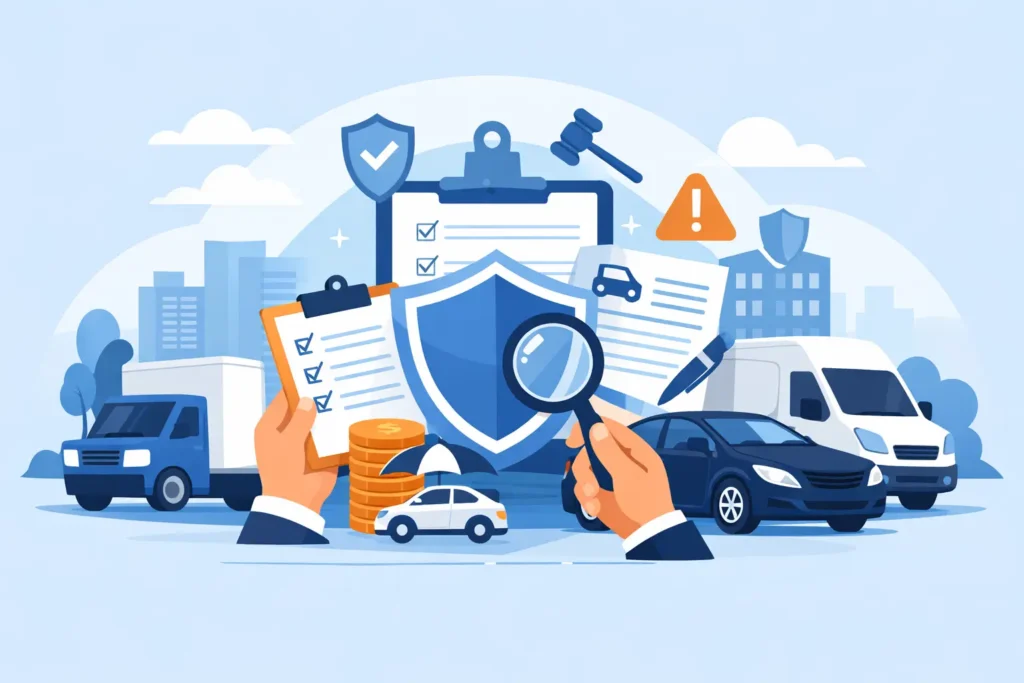
A work truck gets into a fender bender on the way to a job site. A delivery van backs into a customer’s gate. An employee runs an errand in a company-owned car and causes an accident. In each case, commercial auto insurance requirements can affect not just whether the vehicle is legal to operate, but how much financial protection the business actually has when something goes wrong.
For many business owners, the confusing part is that there is no single nationwide rule that applies to every company vehicle. Requirements depend on where the vehicle is registered, how it is used, who drives it, and in some cases what kind of cargo or passengers it carries. That is why it helps to look beyond the bare minimum and understand what your business may realistically need.
What commercial auto insurance requirements usually include
At the most basic level, commercial auto insurance requirements usually start with liability coverage. This is the part of the policy that helps pay for bodily injury or property damage your business is legally responsible for after a covered accident. Nearly every state requires some form of auto liability coverage for vehicles used on the road, including vehicles owned by a business.
That said, minimum required limits are often exactly that – minimums. They may satisfy a registration requirement, but still leave a business exposed if an accident involves serious injuries, multiple vehicles, or property damage that exceeds the policy limit. A contractor with one pickup truck and a regional business with a fleet both need liability coverage, but the right limit can look very different.
Some states also require personal injury protection, uninsured motorist coverage, or other forms of protection depending on local law. On top of state rules, lenders may require physical damage coverage if a vehicle is financed or leased. Contracts can create another layer. If you bid on jobs, deliver goods, or work with municipalities, vendors, or property managers, they may require higher limits than the state does.
When a business needs commercial coverage instead of personal auto insurance
This is where many owners get tripped up. Not every car used for work needs a separate commercial auto policy, but many do. If a vehicle is titled to a business, regularly used for business operations, driven by employees, or used to transport tools, equipment, or goods, commercial coverage is often the safer and more appropriate choice.
Personal auto policies are designed for private household use. Some business-related driving may be allowed, but coverage can become limited if the vehicle is central to your operations. A real estate agent, contractor, landscaper, caterer, or delivery business may face very different risks than a person commuting to an office.
Even if the law does not explicitly say, “you must carry a commercial auto policy,” the practical requirement may still be there. If a claim happens and the insurer determines the vehicle was being used outside the scope of a personal policy, that can create a serious problem at exactly the wrong time.
State rules matter, especially in NJ, NY, and FL
Commercial auto insurance requirements are set largely at the state level, which means businesses in New Jersey, New York, and Florida should not assume the same rules apply across all three.
In New Jersey, commercial vehicles generally need liability coverage to meet state requirements, but the amount and structure of required coverage can vary based on vehicle type and business use. In New York, minimum requirements can be stricter, and businesses operating vehicles across boroughs, counties, or into neighboring states often need to think carefully about both compliance and exposure. Florida brings its own insurance framework, and businesses there should pay close attention to whether additional protections make sense, especially given the frequency of accidents and uninsured drivers in some areas.
If your business operates in more than one state, registration and garaging location matter, but so does where your vehicles travel. A policy should reflect actual operations, not just a mailing address.
The main coverage pieces beyond minimum legal requirements
Meeting the law is one thing. Protecting the business is another. Most commercial auto policies are built from several coverage parts, and each serves a different purpose.
Liability coverage is the legal foundation. It helps with injuries or damage your business causes to others. Physical damage coverage, which includes collision and comprehensive, helps with damage to your own vehicle from accidents, theft, vandalism, weather, or similar events. Medical payments or personal injury protection may apply depending on the state and policy structure.
Uninsured and underinsured motorist coverage can be especially valuable. If one of your drivers is hit by someone with little or no insurance, this coverage can help close the gap. For many businesses, hired and non-owned auto coverage also matters. That protection can apply when employees use rented vehicles or their own cars for business errands. This is often overlooked because the business does not own the car, but it can still face liability.
If your company relies on a vehicle to keep jobs moving, downtime can be expensive. Towing, rental reimbursement, and broader endorsements may be worth considering, depending on how critical the vehicle is to operations.
Why minimum limits often are not enough
A state minimum can look affordable on paper. The problem is that accidents rarely organize themselves around minimum limits.
A single crash involving injuries, a commercial building, or several damaged vehicles can exceed low liability limits quickly. Then the business may be responsible for the remainder out of pocket. For a small company, that can mean cash flow pressure, legal costs, or a setback that takes years to recover from.
There is also the reputational side. Clients and partners want to work with businesses that are prepared. Carrying stronger limits can make it easier to win contracts, satisfy vendor requirements, and show that your business takes risk management seriously.
This is where a practical conversation matters. The right level of protection depends on what you drive, how far you travel, who is behind the wheel, and how much risk your business could absorb if a major claim happened.
Common situations that change your insurance needs
Two businesses can both own vans and still need very different coverage. A florist making local deliveries does not face the same exposure as a contractor transporting tools to multiple sites or a business using larger trucks. If employees drive the vehicles, that adds another layer of risk because driver history affects both eligibility and pricing.
Cargo, specialized equipment, trailers, and signage can also affect the policy. So can after-hours use, interstate travel, and whether vehicles are parked at a business location or taken home by employees. If your business grows from one vehicle to several, the structure of the policy may need to change as well.
Industry matters too. Electricians, plumbers, home health providers, consultants, food businesses, and cannabis-related operations all use vehicles differently. The law may set the starting point, but the business model determines a lot of what should come next.
How to review commercial auto insurance requirements for your business
Start with the basics. Look at who owns each vehicle, how it is titled, where it is registered, and how it is actually used day to day. Then compare that with the insurance currently in place. Many coverage issues come from mismatches between paperwork and reality.
Next, review state minimums and any outside requirements tied to leases, loans, contracts, or licensing. After that, look at practical exposure. Ask what would happen if one accident injured multiple people, totaled a vehicle, or left a key employee unable to work for several days.
This is also a good time to review driver lists, vehicle schedules, and whether employees ever use personal cars for business tasks. Details like these can materially affect how a claim is handled.
For businesses that want guidance without a lot of jargon, working with an independent agency can make the process easier. A relationship-focused agency such as NewEdge Insurance Agency can help translate state rules, identify gaps, and shape coverage around the way your business really operates rather than forcing a one-size-fits-all answer.
The goal is compliance plus confidence
Commercial auto insurance requirements are about more than checking a legal box. They are about making sure one accident does not create a much larger business problem.
If your vehicles help you serve customers, transport equipment, make deliveries, or keep your schedule running, your policy should reflect that reality. A clear review now can save a great deal of stress later – and give you more confidence every time your business heads out on the road.