
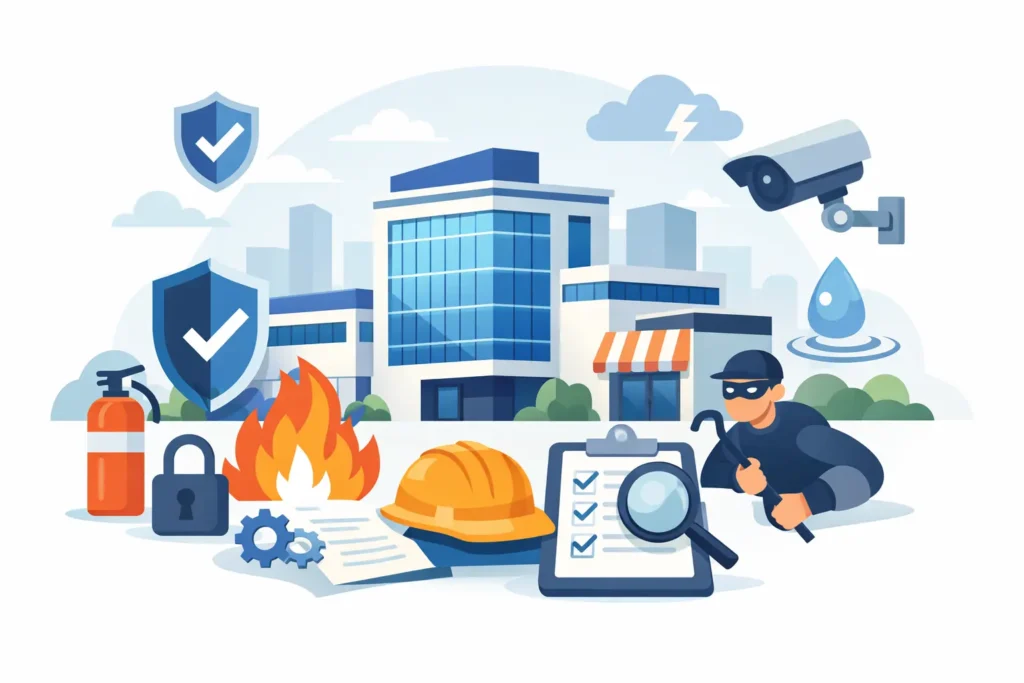
A burst pipe can shut down a professional office for days. A small electrical fire can damage inventory, equipment, and customer records in a matter of minutes. Commercial property loss prevention is the practical work of reducing those risks before they interrupt the business you have worked hard to build.
Insurance is a critical financial safeguard, but it cannot replace lost time, customer confidence, or the disruption of relocating employees after a serious loss. The most effective approach combines the right commercial property coverage with clear, repeatable prevention habits tailored to your building, operations, and location.
Why Commercial Property Loss Prevention Matters
A property claim is rarely limited to the visible damage. Water from a failed appliance or roof leak can affect flooring, walls, wiring, inventory, and the space below. A fire may create smoke damage well beyond its source. Even after repairs begin, a business may face lost income, temporary operating costs, missed deadlines, and frustrated customers.
For businesses in New Jersey, New York, and Florida, weather deserves particular attention. Coastal storms, wind-driven rain, flooding, freezing temperatures, and power outages create very different exposures depending on where and how a company operates. A retail storefront, warehouse, medical office, restaurant, contractor yard, and professional services firm do not need identical controls.
That is why prevention should not be treated as a generic checklist. It should begin with a straightforward question: What could stop us from opening, serving customers, or fulfilling our commitments tomorrow?
Start With a Clear View of Your Property Risks
Walk through the property as if you were seeing it for the first time. Look above, below, behind, and outside the building. Include areas employees may overlook, such as utility rooms, storage spaces, roof access points, loading areas, and vacant portions of the premises.
Pay special attention to the age and condition of the roof, plumbing, heating and cooling equipment, electrical panels, fire protection systems, doors, windows, and drainage. Small warning signs matter. A stained ceiling tile, a recurring breaker trip, water pooling near an exterior wall, or a door that no longer closes securely can signal a larger issue ahead.
Document what you find and assign ownership. Prevention efforts often fail not because a business lacks awareness, but because no one is clearly responsible for arranging the repair, checking on it, and confirming it was completed. A simple maintenance log can create useful accountability and provide a record of care if a loss occurs.
Know the Difference Between Building and Business Personal Property
If you own your building, damage to the structure itself is a major concern. If you lease, the landlord may insure the building, but your business is still responsible for its equipment, furnishings, inventory, improvements, and often certain lease obligations. Do not assume a landlord policy protects your operations.
Business personal property can include computers, machinery, tools, stock, furniture, specialized equipment, and customer property in your care. Take photos, keep purchase records where possible, and update your inventory as the business grows. This makes prevention planning more accurate and can make the claims process less stressful if a loss does happen.
Focus on the Losses Businesses See Most Often
Fire, water, theft, and weather-related damage are common concerns, but the right response depends on the source of risk. A restaurant may need close attention to cooking equipment and grease management. A warehouse may need stronger storage practices and forklift safety controls. An office may be more exposed to water damage from an unoccupied space, failed supply line, or neglected HVAC unit.
Fire prevention starts with functioning alarms, accessible extinguishers, clear exits, and professionally maintained sprinkler or suppression systems where applicable. Electrical safety also deserves regular attention. Avoid overloaded outlets, extension cords used as permanent wiring, blocked electrical panels, and repairs made by unqualified individuals. Keep combustible materials away from heat sources and establish clear rules for hot work, such as welding or cutting.
Water damage prevention is often less dramatic but just as valuable. Inspect supply lines, water heaters, appliances, and restrooms for leaks. Know where the main water shutoff is located, and make sure more than one trusted employee knows how to use it. In colder areas, protect vulnerable pipes from freezing. In storm-prone locations, maintain roof drains, gutters, and exterior drainage so water has somewhere to go besides inside the building.
Security measures should fit the property and the business schedule. Good exterior lighting, working locks, controlled key access, secure cash-handling procedures, and alarm or camera systems can reduce theft opportunities. Just as important, review access when employees, vendors, or tenants leave. An old key, access code, or unreturned device can become an avoidable vulnerability.
Build Prevention Into Daily Operations
The strongest safety programs are not complicated. They are part of the routine. Employees should know what to report, who to tell, and what to do when they spot an issue. A loose ceiling tile or flickering light may seem minor until it becomes evidence of a leak or electrical problem.
Regular inspections work best when they are scheduled. Monthly checks may be appropriate for alarms, extinguishers, emergency exits, visible plumbing issues, and housekeeping. Seasonal inspections can focus on weather preparation, HVAC service, roof conditions, and outdoor drainage. Larger or higher-risk operations may need more frequent professional evaluations.
Housekeeping is a prevention tool, not just an appearance standard. Clear aisles and exits reduce injury and fire concerns. Properly stored inventory is less likely to fall, become damaged by water, or block sprinkler coverage. Trash, cardboard, packaging, and flammable materials should be managed carefully, especially near loading areas and mechanical equipment.
If your business has multiple locations, create one consistent reporting process but allow location-specific adjustments. The controls needed for a Florida retail location facing hurricane season may differ from those needed for a New Jersey office managing frozen-pipe risk. Consistency should not mean ignoring local conditions.
Prepare for a Loss Before It Happens
Even careful businesses can experience a sudden event. Preparation helps protect people first and supports a faster recovery afterward. Create a written emergency plan that identifies evacuation routes, meeting locations, emergency contacts, utility shutoffs, and responsibilities for key employees.
Keep critical information accessible away from the premises. This may include insurance policy details, vendor contacts, lease documents, payroll information, inventory records, building plans, and photographs of equipment. Secure digital backups can be especially helpful when paper files or onsite computers are damaged.
A continuity plan should also address how you will communicate and continue operating. Could employees work remotely? Could orders be fulfilled from another location? Is there a backup supplier for essential materials? The answers will vary, but thinking through them before an emergency gives your team more options when time is limited.
Do not overlook the value of business income coverage and extra expense coverage in your insurance review. Property coverage may help repair or replace damaged items, while these coverages may help address lost income and certain additional costs during a covered interruption. What is covered, for how long, and under which circumstances depends on the policy, so a conversation before a loss is far more useful than one after it.
Review Coverage as the Business Changes
Commercial property loss prevention and insurance planning should move together. A business that adds expensive equipment, expands into a larger space, renovates, increases inventory, or changes its operations may have a different risk profile than it did a year ago.
Coverage limits, deductibles, valuation methods, and policy exclusions all deserve a plain-English review. For example, a higher deductible may lower premium costs but require the business to absorb more of a smaller loss. Replacement cost coverage and actual cash value coverage can produce very different claim outcomes. Flood and earthquake damage may require separate protection, depending on the property and policy.
An independent agency can help business owners compare options and identify questions that are easy to miss. At NewEdge Insurance Agency, the goal is not to overwhelm clients with policy language. It is to help them understand what their property coverage is designed to do and where practical prevention can reduce disruption.
A safer property is built one repair, inspection, and informed decision at a time. Start with the issue you can address this week, then keep the process moving. That steady attention can protect far more than a building – it can protect your ability to keep serving the people who rely on your business.