
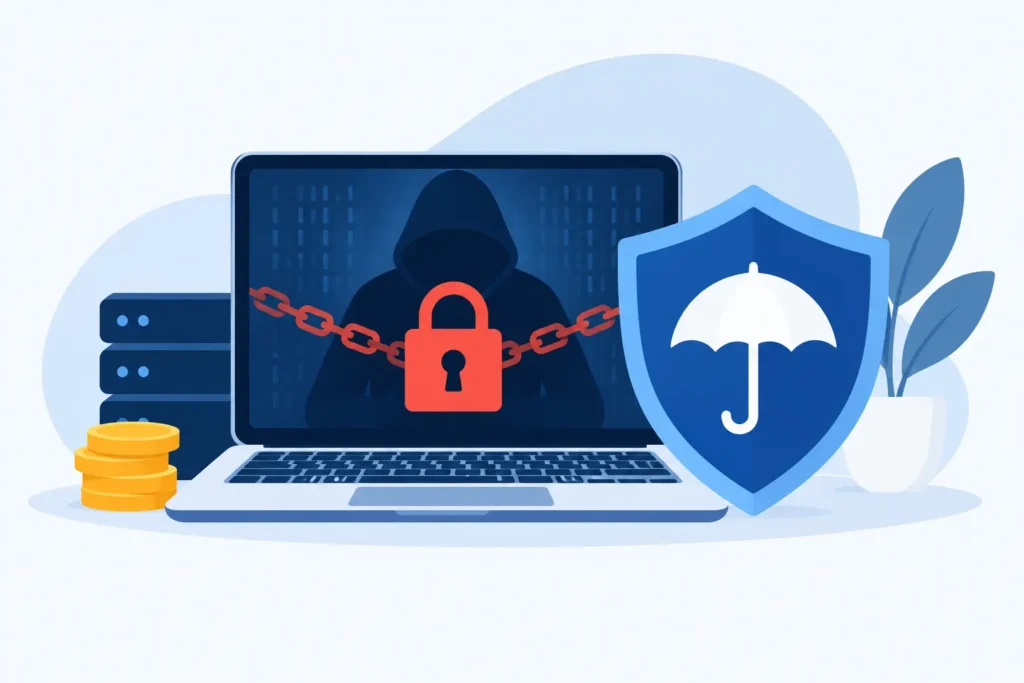
A ransomware message can stop a business cold: files are locked, employees cannot work, and a criminal is demanding payment on a deadline. So, does cyber insurance cover ransomware? Often, yes. But the real answer depends on the policy language, the facts of the attack, and whether the business met the coverage requirements before the loss.
For a small business, professional practice, retailer, or regulated operation, ransomware is not only an IT problem. It can create lost revenue, customer notification obligations, legal expenses, data recovery costs, and difficult decisions about whether a ransom payment is permitted. A well-designed cyber policy can help address many of these costs, but it should never be treated as a blank check.
Does Cyber Insurance Cover Ransomware?
Most commercial cyber insurance policies are designed to respond to ransomware as a type of cyber extortion event. Coverage may help pay for the professional services needed to investigate and contain the attack, negotiate with the threat actor, restore systems, notify affected parties, and manage the business interruption that follows.
Whether the ransom itself is covered is more complicated. Many policies include cyber extortion coverage that can reimburse an insured for an extortion payment, subject to policy limits, sublimits, deductibles, and legal restrictions. The insurer will generally want to involve its breach-response team before a payment is considered. That process protects the business and helps ensure the payment does not violate sanctions laws or other regulations.
A ransomware claim can also involve costs that are far greater than the demand on the screen. If a criminal copies sensitive data before encrypting it, the company may face privacy claims, regulatory inquiries, notification expenses, credit monitoring costs, and reputational harm. The policy’s privacy liability and breach response sections may matter just as much as the extortion section.
What a Ransomware Policy May Pay For
Coverage varies by carrier and policy, but a strong cyber policy commonly addresses several parts of a ransomware event.
Incident response and digital forensics
The first priority is determining what happened. Cyber insurers often provide access to forensic specialists who can identify how the attackers entered, whether they remain in the network, what information may have been accessed, and what systems must be isolated. These services can be expensive, particularly when an attack affects multiple locations, cloud platforms, or employee devices.
Ransomware negotiation and extortion expenses
Specialized incident-response vendors may communicate with the threat actor, assess the credibility of the threat, and advise on available options. If a payment is legally allowed and approved under the policy, cyber extortion coverage may help with the payment and reasonable related expenses, such as cryptocurrency transaction fees.
Paying a ransom does not guarantee that data will be returned, that stolen data will not be released, or that attackers have left the system. It is a business decision made under pressure, with input from legal counsel, forensic professionals, and the insurer’s response team.
Data restoration and system recovery
A ransomware attack may require rebuilding servers, restoring backups, replacing corrupted software, and bringing operations back online safely. Policies may cover reasonable costs to restore electronic data and systems, although coverage terms differ. Some policies distinguish between restoring data and improving or replacing outdated technology. The latter may not be fully covered.
Business interruption and extra expense
When a business cannot process orders, access scheduling software, bill clients, or use point-of-sale systems, income can disappear quickly. Cyber business interruption coverage may replace lost net income and help pay necessary extra expenses to continue operations, such as temporary equipment, overtime, or alternate workspace.
This coverage often has a waiting period and may require detailed financial records to support the loss. Businesses should review how the policy defines a network interruption and whether it responds when a technology vendor, cloud provider, or managed service provider is the source of the outage.
Legal, notification, and customer support costs
If personal information, protected health information, payment data, or confidential business information is exposed, the business may need legal guidance and a formal response plan. Cyber coverage may pay for privacy counsel, required notices, call-center support, credit monitoring, and public relations assistance. These services can help a business communicate accurately without making a stressful situation worse.
Common Gaps and Exclusions to Watch
Cyber insurance is valuable, but it has boundaries. The details should be reviewed before an incident, not while operations are shut down.
Policies may exclude intentional dishonest acts by an insured, known incidents that began before the policy period, or losses connected to war, terrorism, or certain government-backed attacks. Cyber war exclusions have received more attention in recent years, and the wording can vary significantly among carriers.
There may also be limits for ransomware payments, data restoration, or business interruption that are lower than the overall policy limit. A $1 million cyber policy, for example, may not provide $1 million for every category of loss. Sublimits, deductibles, waiting periods, and coinsurance provisions can all affect what the business receives.
Another concern is failure to maintain the security controls described in the insurance application. Insurers commonly ask about multifactor authentication, secure backups, endpoint protection, employee training, and procedures for wire transfers. If the application contains inaccurate information or the business does not follow a stated requirement, coverage could be challenged. The exact result depends on the policy and the circumstances, but it is a risk no business should ignore.
Social engineering and funds-transfer fraud also deserve separate attention. A criminal who tricks an employee into sending money through a fraudulent invoice or altered payment instruction has not necessarily caused a ransomware loss. That exposure may require a specific social engineering or crime coverage endorsement.
Steps to Take Before an Attack
Insurance works best alongside practical cyber hygiene. A carrier may look more favorably on businesses that can show reasonable, documented controls, but the bigger benefit is reducing the chance and severity of a loss.
Businesses should use multifactor authentication for email, remote access, financial systems, and administrator accounts. They should maintain encrypted backups that are separated from the primary network, test those backups regularly, and promptly apply security patches. Employees also need training to recognize phishing emails, fraudulent login pages, and urgent payment requests.
An incident response plan is equally useful. It should identify who has authority to make decisions, how to contact IT support and the insurer, where key vendor contacts are stored, and how the business will communicate if email is unavailable. Keep a printed copy or an offline version of that plan. During a ransomware event, the network may be the last place you can look for it.
What to Do When Ransomware Is Discovered
Act quickly, but avoid impulsive decisions. Disconnect affected devices from the network if it can be done safely, preserve evidence, and contact your IT team or incident-response provider. Notify your cyber insurer or agent as soon as possible. Most policies include reporting conditions and preferred vendors, and using the carrier’s response resources from the start can prevent avoidable disputes later.
Do not erase systems, restore backups, communicate directly with attackers, or promise notifications to customers before qualified professionals assess the situation. Those actions may interfere with forensic work or create unnecessary legal exposure. Document what you know, including the time the attack was discovered, affected systems, suspicious emails, and any ransom messages.
Choosing Coverage That Fits Your Business
The right cyber policy depends on how your business operates and what information it holds. A law firm, medical office, contractor, retailer, cannabis business, and professional services company may all face ransomware, but their revenue dependencies and regulatory responsibilities are different.
Ask how the policy handles ransomware payments, digital forensics, business income loss, vendor outages, data restoration, privacy liability, and social engineering fraud. Confirm the available limits and sublimits, the waiting period for income loss, and the cybersecurity controls required for coverage. Plain-English answers matter because the policy will be tested during a stressful, time-sensitive event.
A ransomware event is never a situation a business should face alone. NewEdge Insurance Agency can help business owners review cyber coverage before a claim forces difficult decisions, so their protection reflects the way they actually work and the risks they cannot afford to carry themselves.