
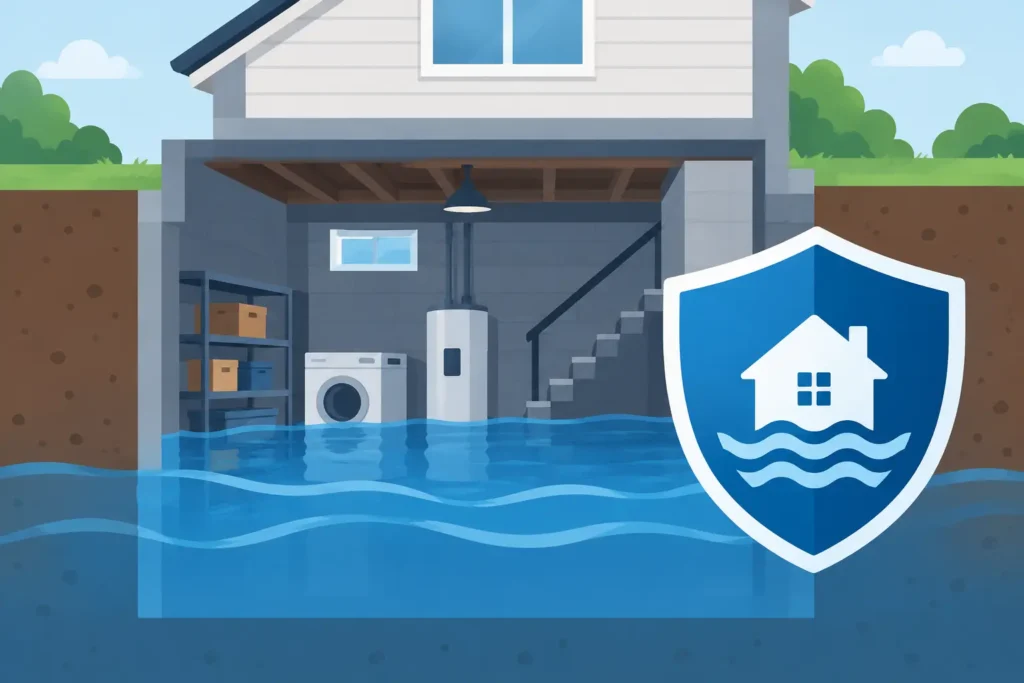
A flooded basement can turn a finished living space, storage area, or utility room into a costly cleanup within hours. So, does flood insurance cover basements? The answer is yes, but only in a limited way. Coverage usually focuses on the building systems that make the home safe and functional, not the improvements or personal belongings that make a basement comfortable.
That distinction can be frustrating after a loss, especially for homeowners who use a basement as a family room, home gym, office, or guest space. Knowing the limits before heavy rain, coastal flooding, or an overflowing waterway occurs can help you make better coverage decisions and avoid unwelcome surprises during a claim.
Does Flood Insurance Cover Basements Under a Standard Policy?
Most flood insurance policies provide restricted basement coverage. Under the National Flood Insurance Program, or NFIP, a basement is generally defined as any area below ground level on all sides. That definition can include a finished basement, even if it has windows, exterior doors, or a walkout entrance.
When floodwater enters that space, the policy may cover certain essential building items and equipment. It generally does not cover most finished surfaces, furniture, electronics, or stored personal property below ground.
Private flood insurance policies may use different definitions and offer broader options, but that is not automatic. Every policy has its own terms, limits, exclusions, and deductibles. The right question is not simply whether you have flood insurance. It is whether the policy you have protects the specific parts of your basement that would be expensive to replace.
What Flood Insurance May Cover in a Basement
For an eligible flood loss, standard NFIP coverage may pay to repair or replace important equipment and building components located in a basement. The goal is to restore basic functions, not necessarily to rebuild a finished lower level exactly as it was.
Covered items can include a furnace, water heater, electrical outlets and switches, circuit breaker boxes, central air-conditioning units, fuel tanks and the fuel inside them, sump pumps, and stairways. Permanently installed drywall, paneling, or flooring may be covered only in limited circumstances, often when needed to repair or access a covered building component.
A washer and dryer may also be eligible under certain NFIP coverage provisions. Appliances and equipment must be damaged directly by a covered flood, which generally means water that temporarily inundates normally dry land and affects two or more properties, or two or more acres. Water damage from a failed pipe or sewer backup is not necessarily a flood claim, even if the result looks very similar inside your basement.
If you have a private flood policy, it may provide more flexibility for basement contents or finishes. However, broader coverage often comes with different underwriting rules, exclusions, waiting periods, or deductibles. Reviewing the policy language matters more than relying on the word “flood” on the declarations page.
What Is Usually Excluded From Basement Flood Coverage
The biggest coverage gap involves finished basement features and belongings. Under a typical NFIP policy, flood damage to carpeting, finished flooring, drywall, wallpaper, bookcases, cabinets, window treatments, and most finished walls is usually excluded when those items are in a basement.
Personal belongings below ground are also commonly excluded. This may include sofas, televisions, computers, exercise equipment, clothing, books, toys, artwork, tools, and boxed storage. Freezers and the food inside them are generally not covered in a basement under standard NFIP rules, either.
This does not mean a basement is never worth insuring. The mechanical equipment alone can represent a major expense. But homeowners should be realistic about what they could have to pay for themselves after a flood. A beautifully finished basement can create a large uninsured exposure if the policy does not specifically extend coverage to finishes and contents below grade.
Flood Damage Is Not the Same as Water Damage
Homeowners insurance and flood insurance address different types of water problems. A standard homeowners policy typically does not cover damage caused by rising water, storm surge, or water overflowing from a nearby river, creek, or drainage system. Those events usually require flood insurance.
On the other hand, a sudden burst pipe may be covered by homeowners insurance, subject to the policy terms. Sewer or drain backup is often handled through a separate endorsement, while groundwater seepage may be excluded. A sump pump failure can be especially complicated because the cause of the water matters.
For homeowners in New Jersey, New York, and Florida, this distinction is particularly relevant. Coastal storms, intense rainfall, saturated ground, aging drainage systems, and changing weather patterns can all create water losses that do not fit neatly into one category. Reviewing flood coverage alongside homeowners coverage and any water-backup endorsement provides a clearer picture of where protection begins and ends.
How to Protect a Basement Before a Flood
Insurance is one part of the plan. Reducing the amount of damage that can occur is just as valuable, particularly where basement coverage is limited.
Keep valuable possessions above ground level whenever possible. If your basement must be used for storage, place items in elevated, waterproof containers rather than cardboard boxes on the floor. Keep an inventory with photos, receipts, and serial numbers for major equipment and belongings. After a loss, this documentation can make the claims process far easier.
It is also wise to maintain gutters, downspouts, grading, drains, and sump pumps. Consider a battery backup for the sump pump, since power outages often arrive with the same storms that cause flooding. If your area has a history of water intrusion, speak with a qualified contractor about practical mitigation options, such as flood openings, improved drainage, or relocating critical equipment to a higher level.
Be careful with basement renovations. Before investing in a new floor, custom cabinetry, or an entertainment area, understand what your flood policy would pay if several inches of water entered the space. The answer may affect both the materials you choose and the amount of financial risk you are willing to take on.
Questions to Ask Before Buying or Renewing Flood Insurance
A policy review should be specific to your home, not just your ZIP code. Ask how your insurer defines a basement and whether your lower level qualifies. Find out whether the policy is written through the NFIP or a private insurer, and ask whether there is any coverage for finished improvements or personal property below ground.
You should also ask about building limits, contents limits, deductibles, waiting periods, and the claims process. Many flood policies have a waiting period before coverage takes effect, so buying insurance when a storm is already approaching may be too late. Mortgage requirements are another consideration. A lender may require flood coverage in certain flood-prone areas, but the required amount may not fully reflect the cost to repair your home or replace essential systems.
For a finished basement, a careful review can reveal whether increasing coverage, considering private flood options, or setting aside emergency savings makes the most sense. There is no one answer for every household. A homeowner with an unfinished utility basement has a different risk profile than a family whose lower level contains a playroom, office, bathroom, and expensive furnishings.
If Your Basement Floods, Take These Steps First
Safety comes before cleanup. Do not enter a flooded basement if there is a risk of electrical shock, structural damage, contaminated water, or gas leaks. If it is safe to do so, document the damage with photos and video before removing items or beginning major repairs.
Report the claim promptly and keep receipts for reasonable emergency actions, such as water removal or temporary protection from further damage. Do not discard damaged equipment or belongings until your insurer or adjuster advises you to do so, unless they create a health or safety hazard. Your carrier can explain what documentation it needs and which repairs should wait for inspection.
A basement flood is stressful enough without uncertainty about the policy. Before the next major storm, take time to review how your home is protected, where the gaps may be, and what steps can make recovery more manageable. A knowledgeable local insurance professional can help turn a complicated policy into a plan that fits the way you actually use your home.