
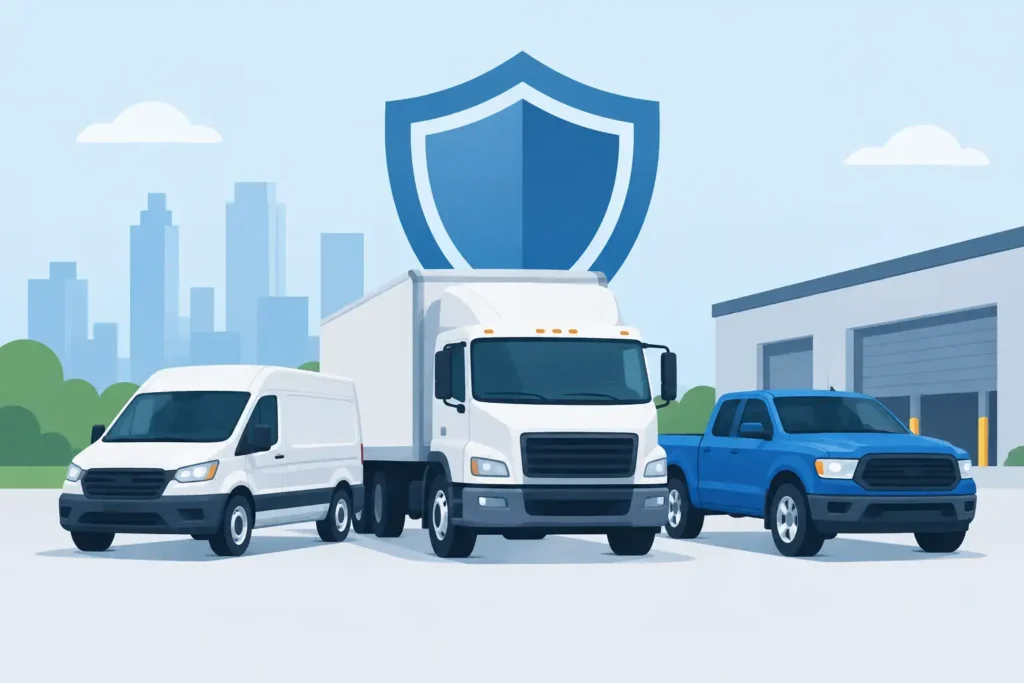
A work vehicle can be a delivery van, a contractor’s pickup, a real estate agent’s sedan, or a car used to visit clients between appointments. The moment a vehicle supports your business activity, personal auto insurance may leave a costly gap. Commercial auto coverage is designed to protect the business, its drivers, and its financial stability when an accident, theft, or vehicle-related claim disrupts the workday.
For many small business owners, the question is not whether vehicles create risk. It is whether their current policy reflects how those vehicles are actually used. Clear answers matter, especially when one accident can lead to vehicle repairs, medical bills, legal expenses, missed work, and a claim against the business.
What Commercial Auto Coverage Does
Commercial auto insurance provides liability and physical damage protection for vehicles used in connection with a business. Depending on the policy, it can cover vehicles your company owns, leases, rents, or in some cases, vehicles employees use for business purposes.
The central protection is auto liability coverage. If a covered driver causes an accident that injures another person or damages their property, liability coverage can help pay for covered claims, legal defense, and settlements up to the policy limit. Without adequate limits, the business may be responsible for the remaining costs.
A well-built policy can also include protection for damage to your own vehicles. Collision coverage may help repair or replace a vehicle after an accident, while comprehensive coverage may respond to losses from theft, vandalism, fire, falling objects, or certain weather events. These coverages are especially worth reviewing when a vehicle is essential to daily operations or carries a loan or lease requirement.
When a Personal Auto Policy May Not Be Enough
Many business owners begin with a personal policy because the vehicle is titled in their own name. Ownership is only one part of the picture. Insurers also look closely at use.
Regular client visits, deliveries, transporting tools or materials, traveling between job sites, and carrying passengers for work can all change the exposure. A personal policy may provide limited business-use protection in some situations, but it is not a substitute for commercial coverage when the vehicle is a regular part of the business.
This issue also arises with employees. If an employee drives a personal car to run errands, make deliveries, or visit customers, the employee’s personal policy may be the first source of coverage after an accident. But the business could still be named in a lawsuit. Hired and non-owned auto liability coverage can help address this risk. It does not insure the employee’s vehicle for physical damage, but it can protect the business from liability arising out of qualifying business use of vehicles it does not own.
The Coverage Decisions That Matter Most
Commercial auto policies are not one-size-fits-all. The right policy depends on the vehicles, who drives them, where they travel, what they carry, and how much loss the business could absorb. A consultant who drives to local meetings has a different risk profile than a contractor with multiple trucks, trailers, and employees crossing state lines.
Liability limits
State minimum requirements are a legal starting point, not necessarily a sound business decision. Serious injuries can exceed low limits quickly, particularly when several people are involved or a commercial vehicle strikes another vehicle. Higher liability limits can provide a stronger financial buffer and may be required by contracts, landlords, or clients.
A commercial umbrella policy may add another layer of liability protection above qualifying auto and other underlying policies. It can be a practical consideration for businesses with significant assets, frequent driving exposure, or contractual obligations.
Physical damage and replacement needs
Collision and comprehensive coverage are optional in many cases, but optional does not mean unnecessary. Consider the vehicle’s value, outstanding loan balance, replacement cost, and whether the business could continue operating without it. A damaged work van may mean more than a repair bill. It can mean canceled appointments, delayed projects, and lost income.
For newer vehicles, gap coverage may also be worth discussing if the loan or lease balance could exceed the vehicle’s actual cash value after a total loss.
Drivers and driver management
Your policy is only as reliable as the information behind it. Every regular driver should be disclosed, and businesses should review motor vehicle records before hiring drivers or assigning company vehicles. A written driving policy, clear rules about personal use, and procedures for reporting tickets or accidents can reduce confusion before a claim occurs.
This is not about assuming the worst of employees. It is about protecting people with clear expectations. A preventable accident can affect an employee’s well-being, the company’s reputation, and future insurance costs.
Vehicles, equipment, and cargo
Tools, equipment, and cargo are not automatically covered simply because they are inside a covered vehicle. Contractors, florists, caterers, delivery businesses, and other operators often need separate inland marine, equipment, or cargo coverage for what they transport. Likewise, permanently attached equipment, trailers, and customized vehicle features should be listed and reviewed carefully.
A policy conversation should account for the full value at risk, not just the vehicle itself.
Common Businesses That Need Commercial Auto Protection
Commercial auto coverage is relevant across far more industries than trucking and delivery. A single vehicle can create meaningful liability exposure when it is used for business.
Common examples include contractors and tradespeople, home health providers, real estate professionals, restaurants offering delivery, retail businesses making local deliveries, landscaping companies, cleaning services, consultants visiting client locations, and nonprofit organizations transporting staff or supplies. Businesses in regulated or specialized fields, including cannabis operations, may also face transportation and compliance concerns that require careful insurance planning.
The details matter. A plumber carrying equipment across New Jersey, a business owner traveling between New York client sites, and a Florida service company operating through severe-weather season do not have identical needs. Local laws, vehicle registrations, operating territory, and contract requirements should all be part of the review.
How to Build the Right Commercial Auto Coverage
Start with an honest inventory of how your business uses vehicles. Include vehicles titled to the business and personally owned vehicles used for work. Note who drives, how often they drive, the typical distance traveled, where they travel, and whether they transport people, goods, tools, or hazardous materials.
Then consider the financial impact of a major accident. Ask whether your current liability limit would be enough if someone suffered a serious injury and filed a lawsuit. Think about the cost to replace a totaled vehicle, rent a temporary replacement, and keep employees working while repairs are completed.
It also helps to review certificates of insurance and contract language before signing new client agreements. Some contracts require specific limits, additional insured status, or proof of hired and non-owned auto liability. Finding out after a contract is signed can create delays and unnecessary expense.
An independent agency can help compare available options and explain where coverage may overlap or fall short. At NewEdge Insurance Agency, the goal is not to burden a business owner with policy language. It is to help make the decisions understandable, practical, and aligned with the way the business actually operates.
What to Do After a Business Vehicle Accident
Safety comes first. Make sure anyone injured receives medical attention and contact emergency services when appropriate. Exchange information, document the scene with photos if it is safe to do so, and notify your employer or business contact promptly.
Avoid admitting fault at the scene or discussing details beyond the facts. Preserve records related to the vehicle, the driver, and the trip, including delivery logs or job information if relevant. Prompt reporting gives the insurer a better opportunity to investigate the claim and arrange repairs or defense when coverage applies.
A business should also look beyond the immediate damage. After an accident, review whether another vehicle is needed temporarily, whether customers need to be notified of scheduling changes, and whether the incident reveals a gap in driver training or vehicle maintenance procedures.
A Policy Should Keep Pace With the Business
Commercial auto coverage should be reviewed whenever the business changes. Adding a driver, purchasing a vehicle, expanding into a new service area, taking on delivery work, or signing a larger contract can all affect coverage needs. Waiting until renewal may leave the business exposed in the meantime.
The right policy is not simply the least expensive one. It is the one that makes sense for the work your vehicles perform, the people who depend on them, and the financial consequences your business could face after an accident. A thoughtful review now can help you keep moving forward when the road becomes unpredictable.