
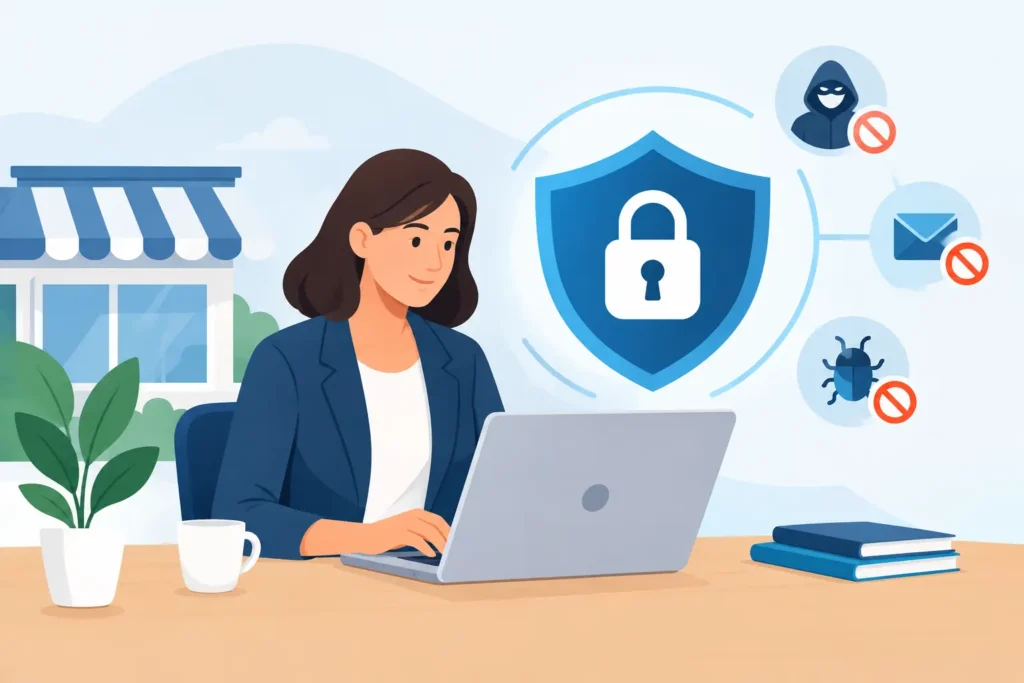
A suspicious email, a stolen laptop, or a vendor’s compromised login can quickly become a business-wide problem. This cyber liability guide explains what cyber insurance can do when customer information, business funds, or daily operations are at risk – and how to choose coverage that fits the way your company actually works.
For small businesses, cyber risk is not limited to large-scale hacks that make headlines. A single fraudulent wire transfer, ransomware attack, or accidental disclosure of client information can lead to costly downtime, legal obligations, and a loss of customer trust. The right policy cannot prevent every incident, but it can give you financial support and experienced help when the pressure is highest.
Why General Liability Is Not Enough
Many business owners assume their general liability policy will respond if a cyber incident causes a loss. Usually, it will not. General liability is designed to address risks such as bodily injury, property damage, and certain advertising injuries. It generally does not pay for the specialized expenses that follow a data breach or network attack.
Cyber liability insurance addresses a different type of exposure: the financial consequences of compromised data, disrupted computer systems, and technology-related liability. Depending on the policy, it may help pay for forensic investigation, breach notification, credit monitoring, legal counsel, public relations support, regulatory defense, and customer claims.
The distinction matters because cyber losses often involve several expenses at once. You may need to determine how an attacker got in, restore access to your systems, notify affected individuals, and respond to a demand for payment. Those costs can build before you have fully understood what happened.
What Cyber Liability Coverage May Include
Cyber policies vary, so the declarations page and endorsements matter as much as the policy name. Still, most cyber coverage is built around two broad categories: first-party losses to your own business and third-party liability claims from others.
First-party costs after a cyber event
First-party coverage is intended to help your business recover from an incident affecting your systems, data, or operations. For example, if ransomware prevents your staff from accessing scheduling software, customer records, or accounting files, a policy may cover eligible costs to investigate the attack, restore systems, and manage the disruption.
Business interruption coverage can be especially valuable for companies that rely on email, online sales, cloud-based applications, payment processing, or connected equipment. It may replace certain lost income and cover extra expenses during a covered shutdown. The details matter: some policies require a waiting period before coverage begins, and the definition of a covered system outage may differ from one carrier to another.
Cyber extortion coverage may help with professional negotiators, legal guidance, and certain costs associated with a ransomware demand. Payment is not automatic or advisable in every situation. Law enforcement guidance, legal requirements, sanctions concerns, and the insurer’s incident-response team all play a role.
Funds transfer fraud and social engineering coverage can also be critical. These losses occur when a criminal tricks an employee into sending money or changing payment instructions. Standard cyber coverage may include only limited protection for this risk unless it is specifically added or increased.
Third-party liability and privacy claims
Third-party coverage responds when customers, clients, employees, vendors, or regulators claim that your business failed to protect information or caused harm through a cyber event. A professional services firm, for instance, may face allegations after client records are exposed. A retailer may need to respond when payment information is compromised.
This part of a policy may cover legal defense, settlements, judgments, and certain regulatory proceedings, subject to policy terms. It can also address media liability claims, such as allegations involving online content, copyright infringement, or defamation. Businesses that publish frequently, market heavily online, or manage client content should ask whether this protection is included.
The Cyber Liability Guide Question: What Are You Actually Exposed To?
The best starting point is not a generic coverage limit. It is an honest look at how your business handles money, information, and technology.
Consider the information you collect. Names, email addresses, payment card data, medical details, employee records, login credentials, and proprietary client files do not carry the same level of risk. A company that stores sensitive personal information may face greater notification and regulatory costs than a business that retains only basic contact data.
Next, look at your dependence on technology. If your company cannot invoice customers, schedule appointments, access inventory, communicate with staff, or operate equipment without its systems, downtime can be one of your largest exposures. Estimate what one day or one week without key technology would cost in lost revenue, payroll, emergency vendors, and delayed projects.
Also consider who can move money. Businesses of every size are targeted by impersonation emails that appear to come from a vendor, executive, attorney, or customer. Dual approval for payment changes and verbal confirmation of wiring instructions can reduce the chance of loss, but insurance should be reviewed as a backstop.
Coverage Gaps to Watch For
A cyber policy is valuable, but it is not a substitute for every other form of protection. Crime insurance, professional liability, directors and officers coverage, employment practices liability, and property insurance each address different exposures. Some losses may involve more than one policy, and the wording determines which coverage responds.
Pay close attention to exclusions and sublimits. A policy may provide a lower limit for social engineering fraud than for a network security breach. It may limit coverage for outages caused by a technology vendor, or it may offer only narrow protection for lost income. Retroactive dates can also matter, particularly if an incident began before the policy period but was discovered later.
For regulated industries, the review should go deeper. Healthcare providers, financial professionals, law firms, and cannabis businesses may have sensitive data, compliance obligations, and third-party contracts that create added exposure. A policy should be evaluated alongside the contractual requirements and operating realities of the business, not purchased as a one-size-fits-all package.
How to Choose a Cyber Policy With Confidence
Start by identifying the maximum loss your business could reasonably absorb. This is not always the value of your data. It may be the combined cost of a month-long outage, a ransomware response, client notification, legal defense, and potential fraud loss. The right limit depends on your revenue, contractual obligations, records held, and reliance on technology.
Then review the retention, which is the amount your business pays before insurance begins to respond. A higher retention can lower premium costs, but it should remain manageable during a stressful event. Saving modestly on premium is rarely helpful if the retention is too high to use the policy when you need it.
Ask how claims are handled. A strong cyber policy often includes access to a breach coach, forensic specialists, crisis communications professionals, and recovery vendors. In a cyber incident, speed matters. Waiting to find qualified help after systems are locked or data is exposed can make a difficult situation worse.
You should also ask whether the policy covers your cloud providers and other technology vendors. Most businesses rely on outside platforms for email, payroll, point-of-sale systems, file storage, and customer management. Vendor-related outages are common enough that the policy’s contingent business interruption terms deserve careful attention.
Cyber Insurance Works Best With Everyday Safeguards
Insurers increasingly consider cybersecurity practices during the application process, and for good reason. Basic protections can prevent many common incidents or limit the damage when one occurs.
Multi-factor authentication is among the most effective controls for email, remote access, financial platforms, and administrative accounts. Regular backups, separated from the main network, can improve recovery options after ransomware. Employee training helps staff recognize phishing attempts, while prompt software updates reduce known vulnerabilities.
A written incident response plan is equally practical. It should identify who has authority to make decisions, how to contact your technology provider, where to find insurer reporting instructions, and how employees should communicate during an outage. The plan does not need to be complicated. It needs to be current, accessible, and understood before an emergency.
A Practical Next Step for Your Business
Before purchasing or renewing coverage, gather your current policy, vendor agreements, and a clear picture of the data and systems your business depends on. Then review those details with an insurance professional who can explain the available options in plain English. At NewEdge Insurance Agency, the goal is not simply to place a policy, but to help you understand where a cyber loss could affect your business and what protection can help you move forward with greater confidence.