
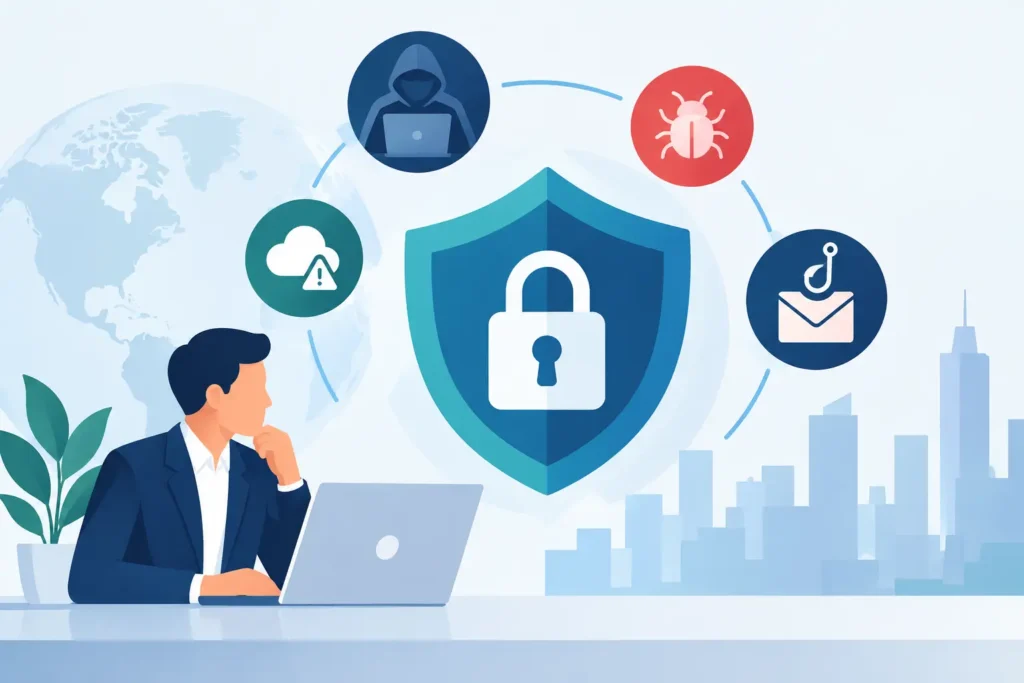
A payroll request arrives from a company executive. The sender’s name looks right, the message sounds urgent, and the bank details appear to be included for convenience. A rushed employee makes the change, only to learn later that the executive never sent the email. That single moment can create a financial loss, a difficult customer conversation, and a serious interruption to business.
Cyber risk trends are no longer limited to large companies with sprawling IT departments. Small businesses, professional firms, property owners, retailers, and family-run operations are all targets because they hold valuable information, move money electronically, and often rely on a small number of people to keep daily operations moving. The practical question is not whether technology creates risk. It does. The question is where your business is exposed and whether your safeguards and insurance coverage match the way you operate.
Cyber Risk Trends Are Becoming More Personal
Many cyber incidents begin with a person, not a complicated technical breach. Criminals use phishing emails, fake invoices, text messages, and phone calls to persuade someone to share a password, approve a payment, or open a harmful file. The messages are becoming more convincing because attackers can study public information about a company, its employees, vendors, and customers.
Artificial intelligence adds another layer. It can help criminals create polished emails with fewer obvious warning signs, imitate a person’s writing style, or generate realistic voice messages. That does not mean every unusual request is an advanced attack. It does mean employees should have permission to pause, verify, and ask questions before handling a payment, password reset, or sensitive record.
For many small businesses, a simple verification process is one of the strongest defenses available. A request to change payment instructions should be confirmed through a known phone number or a second approved contact, not by replying directly to the message. The same principle applies to requests involving wire transfers, payroll changes, gift cards, tax information, and customer data.
Ransomware Is Still About More Than Locked Files
Ransomware remains a major concern because it can stop a business from functioning. An attacker may encrypt files and demand payment for a decryption key. Increasingly, the threat also includes stealing information before locking systems, then threatening to release that information if the business does not pay.
The financial impact can extend well beyond a ransom demand. A business may need forensic specialists to determine what happened, legal guidance, customer notification support, public relations assistance, and credit monitoring for affected individuals. It may also lose income while systems are down or while employees work around unavailable software.
Reliable backups matter, but they are not a complete answer. A backup should be tested, separated from the main network where possible, and capable of restoring critical functions within a reasonable timeframe. A restaurant that cannot process payments, a medical office that cannot access scheduling software, or a contractor who cannot retrieve project files each has a different definition of urgent recovery. Your backup plan should reflect that reality.
Vendor Relationships Create Shared Exposure
Businesses increasingly depend on outside providers for payroll, payment processing, cloud storage, customer relationship management, accounting, shipping, and marketing. Those relationships can save time and support growth, but they also create a dependency on systems outside your direct control.
A vendor does not have to experience a dramatic breach to create problems for your business. An outage at a software provider may prevent access to records. A compromised vendor email account may be used to send fraudulent payment instructions. A weakly protected contractor account may provide a path into your network.
Before signing with a vendor that will handle sensitive information or connect to your systems, ask practical questions. What information will the vendor receive? Who owns it? How will it be protected? What happens if the service goes down? How quickly will you be notified of a security incident? The answers help you manage the relationship and identify where your own cyber insurance and contractual protections may need attention.
Data Privacy Expectations Keep Rising
Customer information has value, whether it includes Social Security numbers, payment details, health-related records, employee files, or simple contact information. A business does not need to be a national brand to face privacy responsibilities. If you collect and store information, you have a reason to think carefully about access, retention, and disposal.
The right approach depends on the business. A professional services firm may hold tax records and confidential client documents. A retailer may process card payments and maintain customer email lists. A property manager may retain tenant applications, identification, and banking information. Each needs controls that fit the information it handles.
Start by reducing unnecessary exposure. Keep only the information you truly need, restrict access by job role, use multi-factor authentication, and remove former employees and vendors promptly. Written procedures are useful, but they work only when people understand them and can follow them during a busy workday.
Cyber Insurance Is Receiving Closer Attention
As cyber losses have grown more frequent and expensive, insurers have placed greater focus on the security practices behind an application. Businesses may be asked about multi-factor authentication, backups, endpoint protection, employee training, privileged account access, and incident response planning. These are not merely application questions. They are indicators of how prepared a business may be when a real incident occurs.
Coverage also deserves a close reading. A cyber policy may help with expenses such as breach response, data restoration, business interruption, cyber extortion, legal defense, and certain liability claims. But every policy has terms, conditions, limits, exclusions, and retention amounts. Crime coverage may also be relevant where a fraudulent transfer or social engineering loss is involved, since not every financial fraud scenario is handled the same way.
The goal is not to buy the largest limit without context. A small accounting practice, a growing cannabis business, and a regional distributor may all need different coverage structures based on their revenue, systems, contractual obligations, data volume, and dependence on technology. A clear conversation about how money moves through the company and where confidential information lives can make coverage decisions far more meaningful.
Practical Steps That Make a Difference
Cybersecurity can feel overwhelming when discussed as a technical project. For most organizations, progress begins with a few disciplined habits that address common sources of loss.
Use multi-factor authentication for email, financial platforms, remote access, and administrator accounts. Keep software and devices updated, because delayed patches can leave known weaknesses exposed. Train employees on suspicious messages and make reporting easy rather than embarrassing. Review who has access to sensitive data and remove access when roles change.
It is also wise to create an incident response plan before a problem occurs. Keep it short and useful. Identify who calls your IT provider, bank, legal counsel, insurer, and key decision-makers. Include after-hours contact information and a process for preserving evidence. If funds are sent to the wrong account, speed matters. If a system is compromised, early action can limit damage.
For households, the same habits apply on a smaller scale. Use unique passwords and multi-factor authentication, be skeptical of urgent payment requests, protect home Wi-Fi, and review financial accounts regularly. Personal cyber protection may be worth discussing when identity theft, online fraud, or digital account recovery would create meaningful financial stress.
Turn Concern Into a Plan
Cyber risk does not disappear because a business is careful, and no insurance policy replaces sound security practices. Still, preparation changes the outcome. It gives your team a way to recognize a problem, respond without panic, and protect the people who trust you with their information.
A periodic review with a knowledgeable insurance advisor can help connect your real operations to the protection you carry. At NewEdge Insurance Agency, the conversation starts with plain-English questions about your business, your technology, and the risks that could disrupt what you have worked hard to build. The best time to clarify those answers is before an unexpected email, outage, or fraudulent request puts them to the test.