
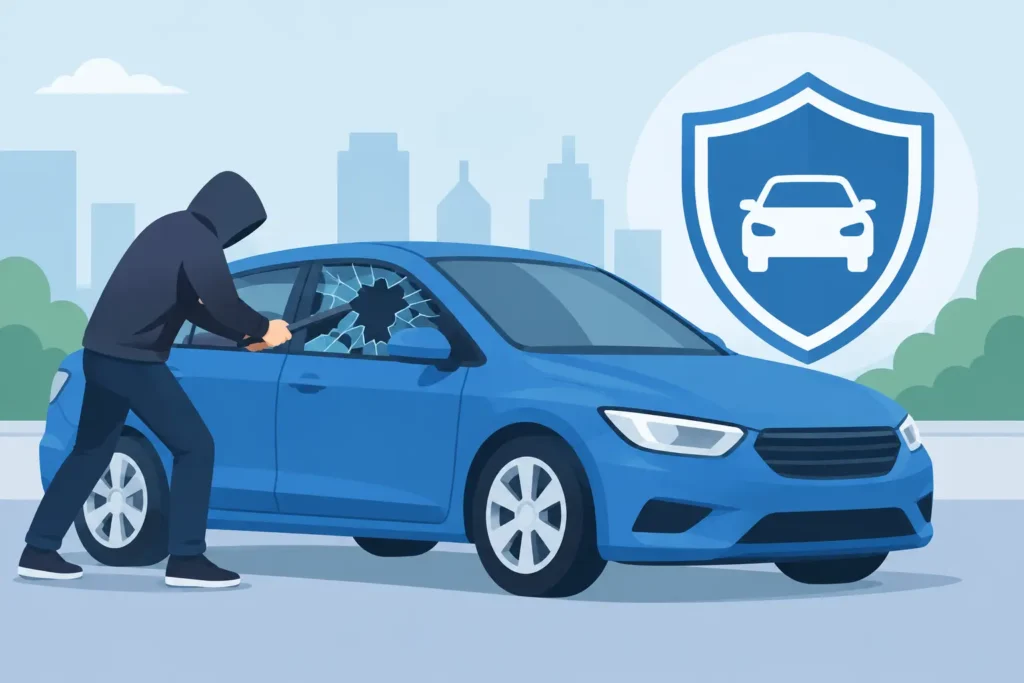
A keyed door, smashed window, spray paint, or slashed tire can turn an ordinary morning into a costly problem. Does car insurance cover vandalism? Often, yes – but the answer usually depends on whether your policy includes comprehensive coverage, the deductible you selected, and the details of the damage.
Vandalism is frustrating because it is damage caused deliberately by another person, often when your vehicle is parked and you have little control over what happened. Knowing what your policy does before a claim is needed can make an upsetting situation much easier to handle.
Does Car Insurance Cover Vandalism?
In most cases, vandalism is covered under comprehensive auto insurance. Comprehensive coverage is the part of an auto policy designed for damage caused by events other than a collision. It may help pay to repair or replace your vehicle after intentional damage such as broken windows, key scratches, graffiti, smashed mirrors, or damage to locks and lights.
Comprehensive coverage is optional in many states, although a lender or leasing company will often require it while you are still making payments on the vehicle. If you own your car outright and carry only the state-required liability coverage, vandalism generally will not be covered.
Liability insurance pays for injuries or property damage you cause to others. It does not pay to repair your own car after vandalism. Collision coverage also has a different purpose: it generally applies when your vehicle strikes another vehicle or object, or when it overturns. A policy can include collision coverage without comprehensive coverage, so it is worth checking the declarations page rather than assuming you have both.
Coverage terms, exclusions, and claim rules vary by insurer and state. Drivers in New Jersey, New York, and Florida should review their individual policy, especially if a car is financed, leased, garaged seasonally, or used for business.
What Counts as Vehicle Vandalism?
Vandalism generally means intentional damage to your vehicle by another person. Common examples include a person scratching paint with a key, breaking a windshield, spray-painting the exterior, stealing or damaging emblems, cutting convertible tops, or puncturing tires.
The facts matter. A shopping cart that rolls into your parked car is accidental damage, not vandalism. Damage from a storm, falling branch, hail, fire, theft, or an animal may still fall under comprehensive coverage, but it would be handled under the appropriate cause of loss. If someone hits your parked vehicle and leaves, it may be treated as a hit-and-run or uninsured motorist claim depending on your state and policy.
There can also be gray areas. If you know who caused the damage and they admit responsibility, their liability insurance may be the first source of payment. You may still choose to use your own comprehensive coverage if that person is uninsured, disputes what happened, or cannot pay promptly. Your insurer may later seek reimbursement from the responsible party, a process known as subrogation.
What to Do After Your Car Is Vandalized
Start by protecting your safety and preserving the evidence. If the person who caused the damage is nearby, or if you feel unsafe, move to a secure location and call law enforcement. Do not confront someone or try to handle a dangerous situation on your own.
Document the damage before cleaning or repairing it
Take clear photos and video from several angles. Capture close-ups of the damage and wider shots showing the full vehicle and surrounding area. If there is broken glass, paint transfer, graffiti, or items left behind, document those as well. Write down the date, time you discovered the damage, and where the car was parked.
If nearby homes, businesses, garages, or cameras may have recorded the incident, ask whether footage can be preserved. Security footage is often overwritten quickly, so acting promptly can be helpful.
File a police report when appropriate
A police report may be required by your insurer, particularly for significant vandalism, theft-related damage, or repeated incidents. Even when it is not required, a report creates a record of what occurred. Ask for the report number and keep it with your photos, repair estimates, and claim information.
Contact your insurer or agent promptly
Report the claim as soon as reasonably possible. Be prepared to share your policy number, the date and location of the incident, photos, a police report number if available, and a description of the damage. Your insurer may arrange an inspection, request additional documentation, or direct you to a repair facility.
An independent agency can be especially helpful at this stage. NewEdge Insurance Agency can help clients understand what their policy may cover, what information is needed, and how to keep the claim process moving without unnecessary confusion.
Make temporary repairs only when needed
If a broken window, damaged door lock, or other issue leaves the vehicle exposed or unsafe, take reasonable steps to prevent further damage. Keep receipts for temporary repairs, such as a tow, protective covering, or emergency glass service. Before authorizing major work, confirm your insurer’s claim instructions and whether an inspection is needed.
Will You Have to Pay a Deductible?
Usually, yes. Your comprehensive deductible is the amount you pay before insurance contributes to a covered loss. For example, if the repair bill is $1,800 and your comprehensive deductible is $500, the insurer may pay the remaining covered amount after the deductible.
For smaller repairs, it may not make financial sense to file a claim. If a minor scratch costs $450 to repair and your deductible is $500, there may be no payment from the insurer. Even when the damage exceeds the deductible, consider the total repair cost, your claims history, and your comfort with paying out of pocket before deciding.
A claim does not automatically mean your premium will rise, but rates and eligibility can be affected by many factors, including claim frequency, location, insurer guidelines, and the circumstances of the loss. An agent can help you think through the decision, though they cannot promise a particular rating outcome.
Rental Cars, Personal Belongings, and Other Costs
Comprehensive coverage may help with the vehicle damage itself, but related expenses are not always covered automatically. Rental reimbursement is typically available only if you added rental coverage to your policy. Without that endorsement, you may need to pay for a rental vehicle while repairs are completed.
Personal items stolen from or damaged inside your car, such as a laptop, golf clubs, or a child seat, may not be covered by your auto policy. Homeowners or renters insurance may provide coverage for certain belongings, subject to its deductible and limits. Business equipment, tools, or inventory can require separate commercial coverage.
If vandalism damages custom wheels, electronics, decals, or other aftermarket equipment, coverage may be limited unless those additions were disclosed and properly insured. This is one reason to review your policy after making significant upgrades to your vehicle.
Reducing the Chance of Future Damage
No precaution can eliminate vandalism, but practical choices can reduce the opportunity for it. Park in well-lit areas, use secured garages when available, avoid leaving valuables visible, and consider a vehicle alarm or camera system. If your neighborhood experiences repeated incidents, report them to local authorities and let your insurer know if your garaging location or vehicle use changes.
The most useful protection is not guessing what your policy says after damage happens. Review whether you carry comprehensive coverage, confirm your deductible, and ask questions while there is time to make thoughtful choices. When an unexpected incident affects your vehicle, clear guidance and a responsive insurance partner can help you focus on getting safely back on the road.