
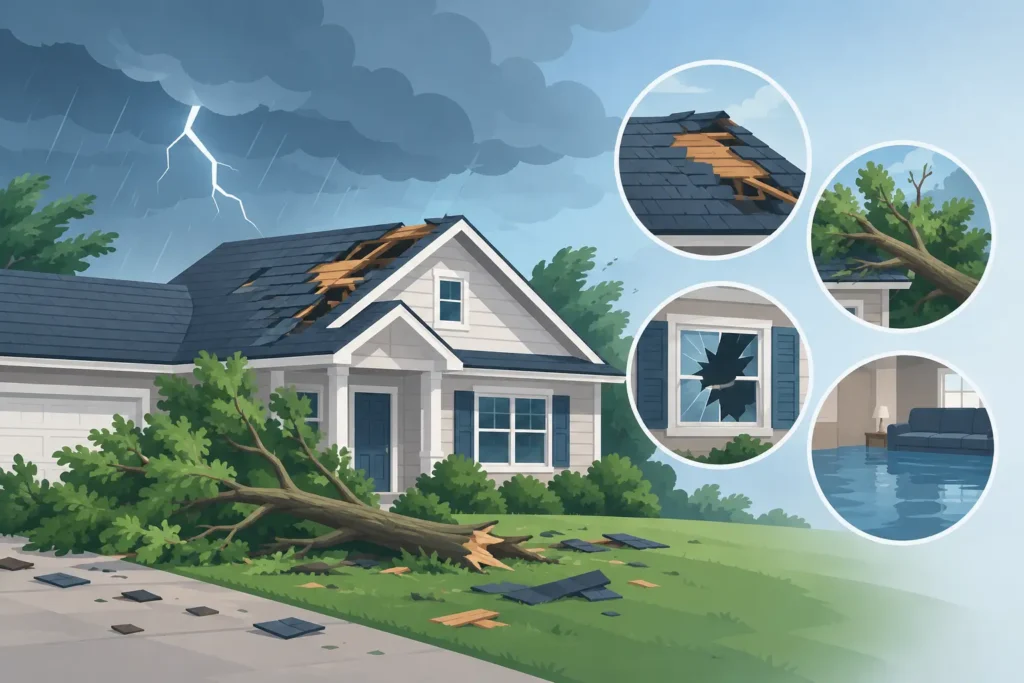
A windstorm can lift shingles without leaving a dramatic hole in the roof. A few hours later, rain finds that opening, stains a ceiling, and damages insulation, flooring, and furniture. Storm damage examples often begin this way: with a loss that looks small at first but can become costly if it is not addressed quickly.
For homeowners and business owners in New Jersey, New York, and Florida, severe weather is not an abstract risk. Coastal storms, heavy rain, high winds, hail, lightning, and tropical systems can each affect property differently. Knowing what damage to look for, what your policy may address, and what to do first can make the claims process less stressful.
Common Storm Damage Examples to Watch For
Storm losses are not limited to a fallen tree or a flooded building. Damage may be visible immediately, or it may appear days later as water stains, mold, electrical problems, or weakened building materials.
Wind damage to roofs, siding, and outdoor property
High winds can tear off shingles, loosen flashing, bend gutters, crack siding, and damage soffits. They may also send patio furniture, fencing, branches, or other debris into windows and exterior walls. In stronger storms, wind can topple trees onto a home, garage, vehicle, storefront, or commercial building.
A roof may still look intact from the ground after a storm. Missing granules, lifted shingles, or damaged seals can be difficult to spot but may allow water inside during the next rainfall. If it is safe, take photos from the ground and arrange for a qualified inspection rather than climbing onto a potentially compromised roof.
Water damage from a sudden roof or window leak
When wind or falling debris creates an opening in a covered structure, rain entering through that opening may lead to interior water damage. Ceiling drywall, insulation, cabinetry, electronics, inventory, and personal belongings can all be affected.
The source of the water matters. A standard property policy may treat rain entering through storm-created roof damage differently from water that rises from outside and enters the building at ground level. That distinction is one reason detailed photos and a clear timeline are so helpful after a loss.
Hail damage that is easy to miss
Hail can bruise or crack roof shingles, dent metal roofing, damage gutters, break skylights, and harm exterior equipment. It can also cause extensive vehicle damage, including dents, cracked glass, and broken mirrors.
Hail damage is sometimes subtle. A homeowner may not notice it until a contractor identifies compromised shingles, while a business may discover dented rooftop HVAC equipment after the storm. Prompt documentation helps establish what happened and prevents minor damage from being mistaken for ordinary wear and tear.
Lightning and power surge losses
A lightning strike can cause fire, damage wiring, or destroy appliances and electronics. Even when lightning does not hit a structure directly, a related power surge can damage computers, televisions, security systems, point-of-sale equipment, refrigeration, and industrial machinery.
For a business, a surge can interrupt operations as well as damage equipment. A restaurant could lose refrigerated inventory, while a professional office may be unable to access client files or communicate with customers. Coverage for equipment breakdown, business personal property, and lost income varies by policy, so this is worth reviewing before storm season.
Fallen trees and debris
A healthy-looking tree can fail when saturated soil and strong wind work together. Branches and trees may puncture roofs, crush fences, block driveways, damage vehicles, or break utility lines. Damage caused by a fallen tree is often covered under a property policy when it strikes a covered structure, but removal costs and coverage for landscaping can be subject to limits and conditions.
Do not approach downed wires or attempt to remove a tree from a damaged roof. Contact emergency services or the utility company when there is an immediate hazard, then take photos from a safe distance.
Flooding and sewer backup
Flooding is among the most misunderstood storm risks. Heavy rain can overwhelm drainage systems, cause waterways to rise, or push water into ground-level spaces. In many standard home and business property policies, flood damage is excluded unless separate flood coverage is in place.
Sewer or drain backup is another distinct issue. Water backing up through drains or toilets may require a specific endorsement. A policy review can identify whether these protections are included, what deductibles apply, and whether the limits match the property’s actual exposure.
What Insurance May Cover After a Storm
The right answer depends on the cause of loss, the policy language, your deductible, and the coverage limits you selected. Homeowners insurance commonly helps cover sudden, accidental damage from certain wind, hail, lightning, and falling-object events. It may also provide coverage for personal belongings and additional living expenses if a covered loss makes the home temporarily unlivable.
Commercial property insurance can help with damage to a building, business personal property, tools, inventory, and equipment. If a covered event forces a temporary closure, business income coverage may help with lost income and certain continuing expenses. However, the period of restoration, waiting periods, exclusions, and endorsements all matter.
Auto insurance follows its own rules. Damage from hail, windblown debris, flood, or a fallen tree generally falls under comprehensive coverage, not liability-only coverage. This is a meaningful difference for drivers who want protection beyond collisions with another vehicle.
In coastal areas, wind or hurricane deductibles may apply. These deductibles are often calculated differently from a standard flat-dollar deductible and can significantly affect the out-of-pocket amount after a major event. Florida, New York, and New Jersey residents should not assume every storm triggers the same deductible. Reviewing the policy before severe weather arrives is far easier than sorting through it after damage occurs.
What to Do in the First 24 Hours
Safety comes first. Leave the property if there is structural instability, standing water near electrical sources, the smell of gas, or downed power lines. If emergency repairs are needed to prevent further damage, such as placing a tarp over a roof opening or boarding a broken window, keep receipts and take photos before and after the work when possible.
Document the loss carefully. Photograph damaged rooms, exterior areas, equipment, and belongings from several angles. Make a written list of affected items, including approximate age, purchase price, and any available serial numbers. Avoid discarding damaged property until your insurer or claims representative advises you to do so, unless it creates a health or safety risk.
Report the claim promptly and provide straightforward, accurate information about what occurred. Avoid authorizing large repairs before understanding the claims process, except for reasonable emergency mitigation. After widespread storms, reputable contractors can be in short supply, and unfortunately, so can trustworthy ones. Be cautious of anyone demanding full payment upfront, pressuring you to sign immediately, or promising a specific insurance outcome.
For businesses, preserve records that show the interruption. Keep payroll documents, sales reports, invoices, supplier notices, repair estimates, and records of extra expenses incurred to continue operating. Those details can be valuable if a business income or extra expense claim applies.
Prevention Is Part of Financial Protection
No property can be made completely storm-proof, but routine maintenance reduces avoidable losses. Keep gutters clear, trim dead or overhanging branches, secure outdoor furniture before a forecasted storm, and inspect roof flashing and seals regularly. Businesses should also back up critical data, protect equipment from surges, and maintain a written plan for closures, employee communication, and temporary operations.
Coverage deserves the same attention. A policy that worked when a home was purchased or a business opened may no longer reflect renovations, higher rebuilding costs, additional inventory, new technology, or changes in flood exposure. An independent insurance professional can help translate those changes into practical coverage decisions without burying you in policy language.
After a storm, the most useful next step is often a calm conversation with someone who can help you understand what to document, where coverage may apply, and what questions to ask before repairs move forward. That kind of guidance can protect more than a building – it can help protect the stability behind it.