
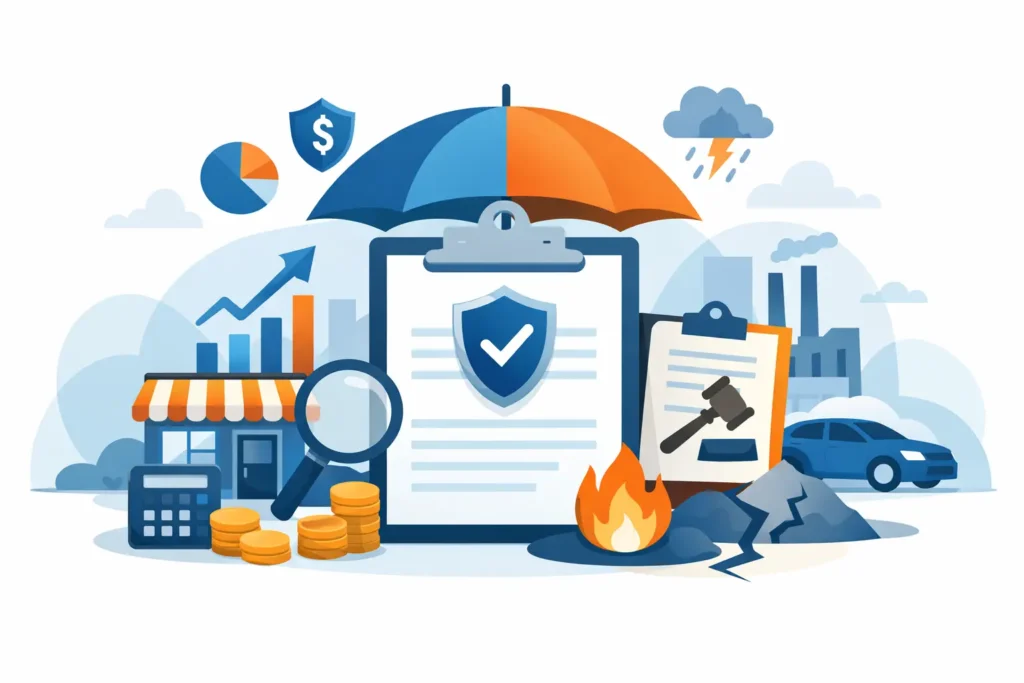
If two businesses sit on the same block and have similar revenue, their small business insurance cost can still look very different. One may pay a manageable monthly premium, while the other faces a much higher number because of payroll, claims history, professional risk, or the kind of property it owns. That is why pricing can feel inconsistent until you understand what insurers are actually measuring.
For most business owners, the real question is not just, “How much does it cost?” It is, “What am I paying for, and am I paying the right amount for my level of risk?” Insurance works best when it matches your day-to-day operations, not when it is built around a generic package that leaves gaps or adds coverage you do not need.
What affects small business insurance cost
Insurance carriers price policies by looking at the likelihood and potential size of a future claim. The higher the chance of loss, or the more expensive that loss could be, the more coverage usually costs. That sounds simple, but several moving parts shape the final premium.
Your industry is one of the biggest factors. A consultant working from a laptop generally creates a different risk profile than a restaurant, contractor, manufacturer, or retail shop with regular foot traffic. Businesses with physical operations, customer interaction, heavy equipment, commercial vehicles, or professional advice exposure usually pay more because more can go wrong.
Location matters too. Businesses in New Jersey, New York, and Florida often face different pricing pressures because insurance rates reflect local litigation trends, weather exposure, property values, and state regulations. A business with a storefront in a coastal area, for example, may see property insurance rates affected by windstorm concerns. A professional office in a dense metro area may face higher liability considerations simply because claim severity can be higher.
Revenue, payroll, and headcount also play a role. In many policies, these numbers help insurers estimate how active your business is and how much exposure exists. More employees can mean greater workers’ compensation costs. Higher revenue can suggest more customers, more jobs completed, or more opportunities for a claim.
Claims history is another major pricing factor. If your business has filed multiple claims, insurers may view that as a sign of ongoing risk. That does not always mean you are a poor risk. Sometimes one large weather loss or a single unusual incident can affect pricing. Still, a clean loss history often helps.
Coverage type changes the price
When business owners compare quotes, they sometimes focus only on the total premium. That can be misleading because small business insurance cost depends heavily on the kind of policy included in the quote.
General liability insurance is often the starting point. It helps protect against claims involving bodily injury, property damage, and certain advertising-related issues. For many small businesses, this is one of the more affordable foundational coverages, but the price can rise if your operations involve higher public exposure, subcontractors, or work at client locations.
Commercial property insurance adds protection for buildings, equipment, inventory, furniture, and other business property. Costs here depend on the value of what is insured, where it is located, construction type, security features, and risks like fire, theft, or severe weather.
Professional liability insurance is especially important for service providers, consultants, and firms that give advice or specialized work. This coverage responds to claims that your services caused a financial loss. Businesses in fields where one mistake can create a costly dispute often pay more for this policy, even if they do not have a physical storefront.
Workers’ compensation is priced differently from many other policies because payroll and job classification are central to the rate. Office staff generally cost less to insure than employees doing manual labor, operating machinery, or working on job sites.
Cyber insurance has become a bigger part of the conversation for small businesses of every size. If you store customer information, process payments, rely on email, or use cloud-based systems, a cyber event can interrupt operations quickly. Pricing depends on the volume of data you handle, your security practices, and the level of cyber exposure tied to your business model.
Some businesses need more specialized coverage. Commercial auto, umbrella liability, product liability, employment practices liability, and industry-specific protection can all increase premiums, but they may also prevent a very expensive uncovered loss.
Why the cheapest quote is not always the best value
A low premium can look attractive, especially when you are managing payroll, rent, supplies, and every other business expense. But insurance is one area where the cheapest option can create expensive problems later.
Two policies may appear similar at first glance while offering very different protection. One may include lower limits, more exclusions, or a deductible that would be difficult for your business to absorb during a claim. Another may leave out key coverages entirely, such as business interruption, hired and non-owned auto liability, or professional liability.
This is where business owners often benefit from a plain-English review. A quote is only useful if you know what it covers, what it does not, and whether it fits the way you actually operate. Paying less for the wrong policy is not real savings.
How insurers look at risk behind the scenes
Insurance pricing is part math, part underwriting judgment. Carriers review application details, prior losses, business operations, contracts, and sometimes even your online presence or cybersecurity controls. They are trying to answer a simple question: how likely is this business to have a claim, and how severe could that claim be?
That is why details matter. If a business owner describes operations too broadly or leaves out an important exposure, the quote may not reflect the real risk. Later, that can lead to coverage issues or a premium change after underwriting review.
It also explains why two carriers may price the same account differently. One insurer may have a stronger appetite for restaurants. Another may be more competitive for professional offices or certain retail classes. Independent guidance can be valuable here because the goal is not just to get any quote, but to find coverage that makes sense for your business and budget.
Ways to lower small business insurance cost without cutting corners
There are practical ways to improve pricing, but they work best when they reduce risk instead of just stripping coverage.
Higher deductibles can lower premiums if your business has enough cash flow to handle a claim out of pocket. Bundling coverages, when appropriate, can also create savings and simplify policy management. Keeping strong documentation, written procedures, employee training, and safety protocols may help reduce claims and present your business more favorably to insurers.
For cyber insurance, using multi-factor authentication, secure backups, and employee phishing training can make a real difference. For property coverage, alarm systems, sprinkler systems, and routine maintenance may help. For liability coverage, solid contracts and clear operational procedures can reduce misunderstandings that turn into claims.
Another overlooked step is reviewing coverage every year. If your revenue changed, you moved locations, added equipment, hired staff, or expanded services, your policy should be updated. Sometimes that raises cost. Other times it helps remove outdated coverage or correct classifications that are inflating premiums.
Small business insurance cost by business stage
A brand-new business often has limited insurance history, which can make underwriting more cautious. At the same time, a startup may have lower payroll or less property to insure, which can keep some costs down. Established businesses may benefit from experience and stronger financials, but if they have grown quickly or developed a claims history, pricing can rise.
Growth usually changes insurance needs before owners realize it. Hiring employees, signing a lease, buying vehicles, storing customer data, or taking on larger contracts can all shift your exposure. If coverage does not grow with the business, the premium may look stable while protection quietly falls behind.
That is why a conversation matters as much as a quote. An agency that takes time to understand your operations can often spot issues that an online form misses, especially when your business has specialized risks or operates in more than one state. For many owners, that kind of support is what turns insurance from a checkbox into a useful part of the business plan.
When it makes sense to get a closer review
If your premium jumped at renewal, if you are opening a new location, or if you are unsure whether your current coverage matches your operations, it is worth taking a closer look. The same applies if you work in areas with more complex exposures, such as professional services, cannabis, or technology-related operations where liability can be less obvious but financially significant.
Small business insurance cost is never just a number on a bill. It reflects the risks your business carries, the protection you choose, and how clearly those risks are presented to the insurer. When coverage is built carefully and explained clearly, the cost tends to make a lot more sense – and so does the peace of mind that comes with it.