
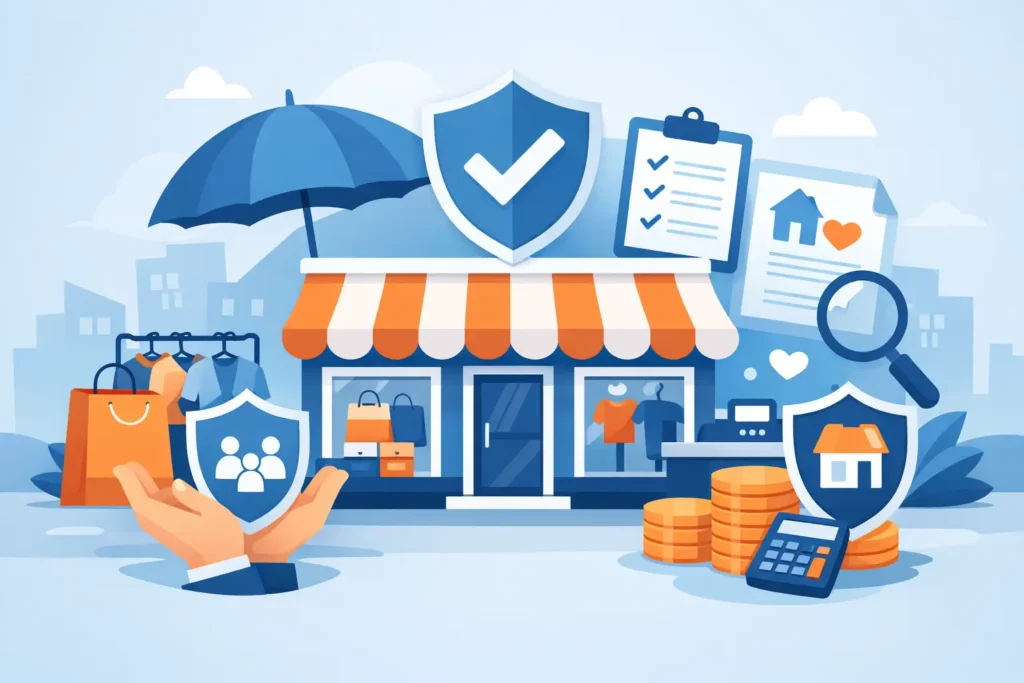
A customer slips near a wet entrance. A burst pipe damages inventory overnight. A stolen card number leads to a payment-data claim. For a retail owner, these are not abstract risks – they are interruptions that can quickly affect cash flow, customer trust, and the ability to reopen. The best insurance for retail stores is not one standard policy. It is a coordinated set of coverages shaped around what you sell, where you operate, who works for you, and how your business serves customers.
A small boutique, neighborhood grocery, salon retailer, dispensary, and multi-location shop may all need business insurance, but their exposures are different. The goal is to protect the business without paying for coverage that does not fit its real operations.
What the Best Insurance for Retail Stores Usually Includes
Most retailers begin with a business owners policy, often called a BOP. This package commonly combines commercial property insurance and general liability insurance, and it may include business income coverage. It can be an efficient foundation for eligible small and midsize businesses, but it should not be treated as a complete solution without reviewing the details.
Commercial property coverage helps pay to repair or replace a covered loss involving the building you own, tenant improvements, fixtures, furniture, equipment, and inventory. If you lease your space, your landlord may insure the building itself, but that does not mean your merchandise, display cases, point-of-sale systems, or improvements are automatically protected.
General liability coverage addresses claims that your business caused bodily injury, property damage, or certain personal and advertising injuries. A customer injured in an aisle, a delivery that damages another property, or a claim arising from your advertising can all create expenses for legal defense and settlements. Even when a claim is unfounded, the cost of responding can be substantial.
Business income coverage is especially valuable after a covered property loss forces the store to close or operate at reduced capacity. It can help replace lost income and pay certain continuing expenses while repairs are underway. The details matter: Coverage is generally tied to a covered cause of loss, and the restoration period needs to be realistic for your location, supply chain, permits, and rebuilding needs.
Property limits should reflect replacement cost, not a rough estimate
Underinsuring inventory is one of the most common problems in retail coverage. Consider seasonal swings, holiday stock, new product launches, and goods stored off-site. A store that carries $75,000 in inventory for most of the year may need a much higher limit before a major sales season.
Also ask whether the policy uses replacement cost or actual cash value. Replacement cost is designed to pay based on the cost to replace covered property, subject to policy terms and limits. Actual cash value generally accounts for depreciation. A lower premium can be appealing, but a depreciated settlement may leave a business owner paying more out of pocket after a loss.
Coverage Retailers Often Need Beyond a Basic Policy
A BOP is a strong starting point for many stores, not a finish line. The right additions depend on the operation.
Workers’ compensation is generally required when a business has employees, though requirements vary by state and business structure. It can provide benefits for job-related injuries or illnesses and helps protect the employer from the financial impact of workplace injury claims. Retail work brings common exposures such as lifting injuries, slips in stockrooms, cuts, and repetitive-motion issues.
Commercial auto coverage may be needed if employees make deliveries, transport inventory, visit markets, or use vehicles for business errands. Personal auto insurance may not fully respond to business use. If staff use their own vehicles, hired and non-owned auto liability coverage can be worth discussing.
Cyber liability insurance deserves attention from nearly every retailer that accepts cards, stores customer information, uses online ordering, or relies on cloud-based point-of-sale systems. A cyber event can involve notification costs, forensic investigation, data restoration, business interruption, fraud, and liability claims. The level of protection should match the systems you use and the data you handle, not just the size of the store.
Crime coverage can help address certain losses involving theft of money, securities, or property by employees and, in some situations, outside parties. Employee dishonesty is an uncomfortable subject, but it is a practical risk to consider where staff handle cash, refunds, inventory, or financial records.
For stores with higher liability exposure, a commercial umbrella policy can provide additional liability limits above eligible underlying policies. This can be useful when a serious injury claim or lawsuit exceeds the limits of general liability, commercial auto, or employers liability coverage.
Retailers selling products under their own label, importing goods, altering products, or offering installation or repair services should also review product and completed operations liability. A claim can arise long after an item leaves the store, so the way products are sourced, labeled, and used matters.
Match Coverage to How Your Store Actually Operates
Insurance decisions are strongest when they begin with a clear picture of the business rather than a generic checklist. A retailer with a storefront and online sales faces different concerns than a pop-up vendor, and a shop in a coastal Florida community may prioritize wind and flood planning differently than one in northern New Jersey or New York.
Location matters because property policies have specific deductibles, limits, exclusions, and causes of loss. Flood damage is typically not included in standard commercial property insurance. Windstorm, named storm, water backup, equipment breakdown, ordinance or law coverage, and spoilage may also require close review based on the property and operations.
For example, a specialty food store may need to consider refrigerated stock and utility service interruption. A clothing retailer may have a large seasonal inventory concentration. A jewelry shop may face higher-value stock and security requirements. A cannabis retailer has regulatory, product, property, security, and professional exposures that call for specialized insurance guidance.
Do not overlook lease requirements. Commercial landlords commonly require tenants to carry general liability insurance, name the landlord as an additional insured, and provide proof of coverage. Those requirements are only the landlord’s minimum standards. They do not necessarily reflect what your own business needs to survive a serious loss.
How to Compare Retail Insurance Quotes Fairly
A lower premium is not automatically a better value. When comparing quotes, make sure the policies are built on the same information and offer comparable limits, deductibles, endorsements, and coverage forms. Otherwise, the least expensive option may simply provide less protection.
Review the property limit, business income limit and restoration period, general liability limit, and each deductible. Ask how inventory is valued, whether equipment breakdown and water backup are included, and what exclusions apply to your specific operations. If your store sells online, ask how cyber coverage responds to ransomware, fraudulent fund transfers, and customer data incidents.
It is also wise to ask what happens during a claim. Insurance is easiest to buy before a loss. The true test comes when you need help documenting damage, understanding next steps, communicating with the carrier, and getting your business moving again. A responsive independent agency can explain options in plain English and remain available when the situation is stressful.
Keep your policy current as the business changes
Retail businesses change faster than their policies often do. A move to a larger location, higher inventory, new product category, online sales channel, delivery service, new equipment, or added employees can all affect coverage needs. Review your policy at least annually and after any meaningful operational change.
Keep photographs of inventory and equipment, updated purchase records, lease documents, and a list of key vendors in a secure location. These records can make a claim easier to document and help you identify whether your current limits still match the business you have built.
A practical way to choose coverage
Start by identifying the losses that would be hardest for your store to absorb: a fire, theft, customer injury, extended closure, cyber incident, employee injury, or product claim. Then place a realistic dollar value on property, revenue, and potential liability rather than choosing limits based only on a premium target.
A knowledgeable advisor can help connect those risks to the policy language, state requirements, and available endorsements. At NewEdge Insurance Agency, that conversation is designed to be personal and straightforward, so business owners can make decisions with a clearer understanding of what is protected and where gaps may remain.
The right policy should give you room to focus on customers, staff, and the next season of growth. Before renewing or opening a new location, take the time to ask one useful question: if the store had to close tomorrow, would this coverage give us a realistic path back to business?