
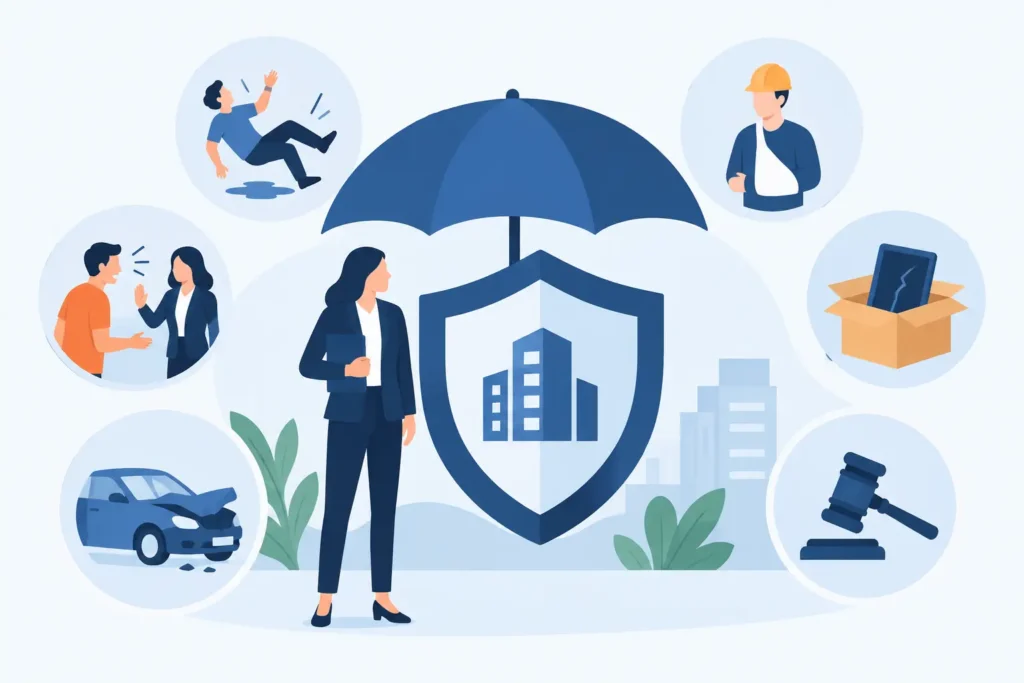
A customer slips near a store entrance during a rainy afternoon. A contractor accidentally damages a client’s hardwood floor. A competitor claims your marketing copied its slogan. These are the kinds of business liability claim examples that can turn an ordinary workday into a costly legal and financial problem.
For business owners, liability insurance is not just about preparing for a dramatic lawsuit. It is about having financial support when someone alleges that your business caused bodily injury, property damage, financial harm, or another covered loss. The right policy can help pay for legal defense, settlements, judgments, and certain related costs, even when the claim is ultimately found to have little merit.
What a business liability claim can involve
A liability claim generally begins when another person or organization says your business is responsible for an injury, damage, or loss. Sometimes that allegation leads to a lawsuit. Other times, it is handled through a demand letter, an insurance claim, or a negotiated settlement.
The type of coverage that may respond depends on what happened and the policy language. General liability insurance often addresses third-party bodily injury, property damage, personal and advertising injury, and related legal defense. Professional liability, employment practices liability, cyber liability, commercial auto coverage, and umbrella coverage address different exposures.
That distinction matters. A general liability policy is a valuable foundation for many businesses, but it is not designed to cover every claim a company may face.
8 business liability claim examples
1. A customer slips and falls at your location
A restaurant guest slips on a wet floor near the restroom and breaks a wrist. A retail customer trips over an extension cord placed across an aisle. A visitor falls on an icy walkway outside an office building.
These claims may involve medical expenses, lost wages, pain and suffering, and legal costs. General liability insurance may help when the business is alleged to have failed to maintain a reasonably safe premises. The facts matter, including whether the hazard was known, whether warning signs were posted, and whether the business followed its usual cleaning and maintenance practices.
2. Your work damages a client’s property
A plumber repairing a pipe accidentally causes water damage to a homeowner’s kitchen. A cleaning company uses the wrong product and stains a client’s stone flooring. A landscaper damages an underground irrigation line while installing a fence.
Property damage claims are common for contractors and service businesses because work often takes place on property the business does not own. General liability coverage may respond to accidental third-party property damage, subject to the policy’s terms and exclusions. Damage to your own tools, equipment, or business property usually requires different coverage.
3. A product causes an injury
A small food manufacturer sells a product that allegedly causes a customer to become ill. A retailer sells a defective item that injures a buyer. A company’s promotional giveaway contains a sharp edge that cuts a child.
Product liability claims can involve the manufacturer, distributor, retailer, or several parties at once. Even a business that did not make the product may be named in a lawsuit. General liability coverage may include products-completed operations coverage, which can be particularly important after a product has left your premises or after work has been completed.
4. An employee damages property while working off-site
A moving company employee scratches a client’s antique furniture. A technician knocks over expensive equipment while servicing an office. A caterer damages a venue’s wall while unloading supplies.
When an employee causes accidental damage during business operations, the company may be held responsible. A general liability policy may help with third-party property damage claims. However, if the damage involves a vehicle, commercial auto insurance may be the coverage to review instead.
5. Your advertising is accused of causing harm
A local business runs an ad that a competitor says falsely suggests the competitor provides inferior service. Another company alleges that your campaign used a slogan too similar to its own. A social media post includes an image used without proper permission.
These claims may fall under personal and advertising injury coverage, depending on the allegation and policy wording. Coverage can involve claims of copyright infringement in advertising, libel, slander, or certain misleading advertising allegations. Not every intellectual property dispute is covered, so business owners should avoid assuming that general liability insurance replaces legal review of branding, contracts, or marketing materials.
6. A client claims your professional advice caused a financial loss
An accountant misses a filing deadline that leads to penalties. A consultant recommends a system that fails to perform as promised. A real estate professional is accused of providing inaccurate information that influences a buyer’s decision.
This is usually not a general liability claim. It is a professional liability claim, often called errors and omissions coverage. The alleged loss is financial rather than bodily injury or physical property damage. Professional liability insurance may help cover defense costs and damages arising from errors, omissions, or negligent professional services.
For advisors, consultants, agencies, health-related providers, technology firms, and other professional service businesses, this coverage can be just as essential as general liability insurance.
7. A former employee alleges discrimination or wrongful termination
A former employee claims they were terminated because of age, race, gender, disability, or another protected characteristic. A manager is accused of harassment. An applicant claims the hiring process was discriminatory.
Employment-related allegations can be expensive to defend, even when a business believes it acted appropriately. Employment practices liability insurance, often called EPLI, may help with claims involving wrongful termination, discrimination, harassment, retaliation, and certain other workplace allegations.
A handbook, regular manager training, clear documentation, and consistent employment practices can reduce risk. They do not necessarily prevent a claim from being filed.
8. A data breach affects customers or vendors
An employee clicks a phishing email, giving criminals access to customer information. A stolen laptop contains unencrypted records. Ransomware interrupts operations and a client alleges the outage caused a financial loss.
Cyber claims can involve notification expenses, forensic investigation, data restoration, regulatory issues, business interruption, and lawsuits from affected parties. General liability insurance typically is not enough for these events. Cyber liability insurance is designed for the costs and responsibilities that can follow a privacy breach or cyberattack.
This exposure is not limited to large companies. Any business that accepts electronic payments, stores customer contact details, maintains employee records, or relies on email can face cyber risk.
Why the claim process matters as much as the policy
When a business receives a demand letter, lawsuit, incident report, or complaint that could lead to a claim, waiting can create problems. Most policies require prompt notice to the insurance carrier. A business should preserve relevant emails, photos, contracts, invoices, surveillance footage, and incident reports, while avoiding statements that could be interpreted as admitting fault.
It is also wise to notify your insurance advisor early. NewEdge Insurance Agency helps clients understand the claims process and communicate with the carrier, so they are not left trying to interpret insurance language during a stressful situation. Coverage decisions are made under the terms of the policy, but timely reporting and complete documentation can make a meaningful difference.
Building coverage around the way your business operates
The right liability protection depends on your industry, contracts, location, revenue, employee count, services, and the types of customers you serve. A contractor may need to focus on completed operations and certificates of insurance. A professional firm may need strong errors and omissions limits. A retailer may need product liability protection, while a cannabis business may need specialized coverage built around a regulated operation.
Policy limits deserve careful attention, too. A $1 million general liability limit may be appropriate for one small business and insufficient for another. Businesses with substantial assets, larger contracts, public-facing locations, or higher-risk operations may also consider commercial umbrella coverage for additional liability protection above underlying policies.
The practical goal is not to buy every available policy. It is to identify the losses that could seriously disrupt your business and make informed decisions about how to insure them. A thoughtful coverage conversation before a claim happens gives you a far better chance of responding with confidence when it does.